Look up
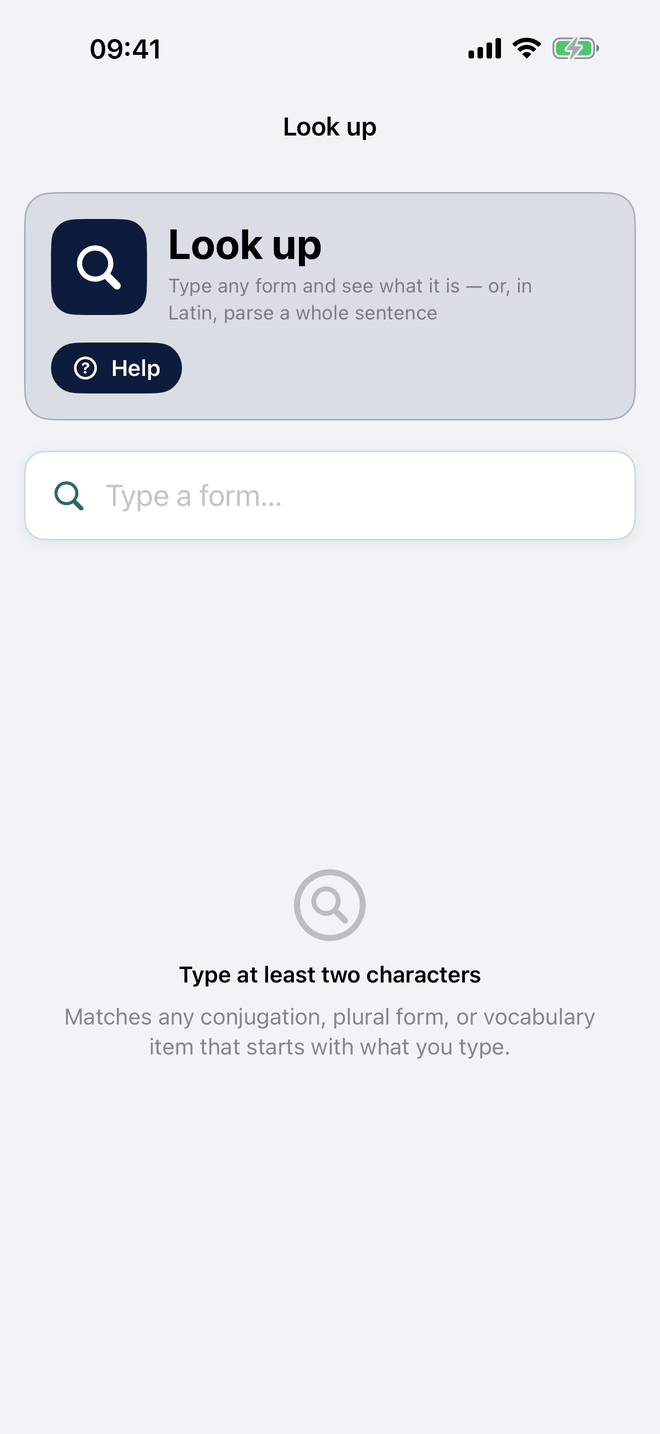
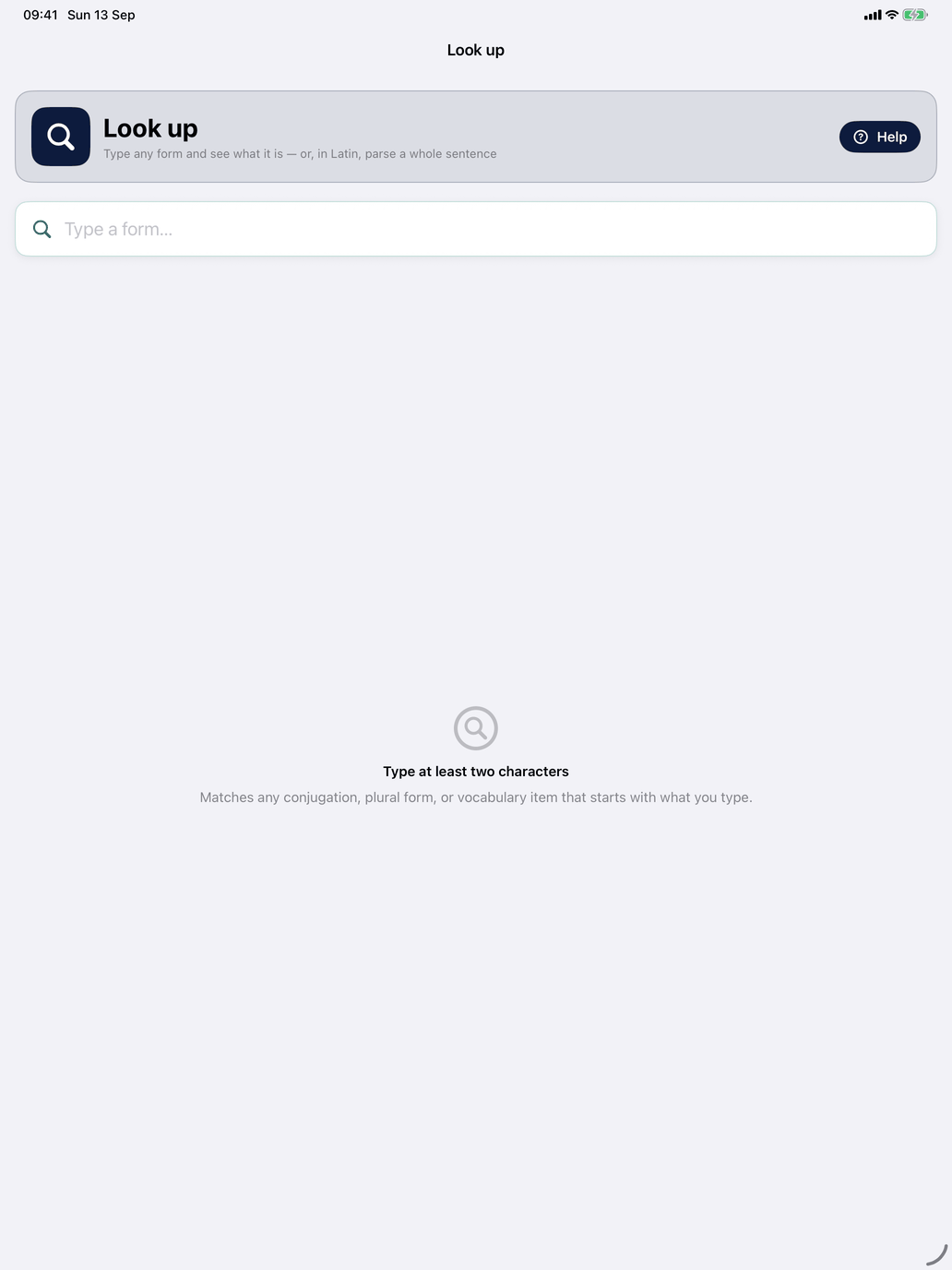
Look up is the place to go when you read or hear a form and want to know what it is. Open it from the Look up icon in the toolbar of the main screen or the Self Study screen, from Look up under Tools on the Self Study screen (iPhone and iPad), or from Look up in the sidebar (Mac).
It has two modes. Word mode looks up a single form in the course you are studying. Sentence mode, in Latin only, parses a whole sentence and labels every word; the Latin course guide covers it. In the other courses there is no mode picker: the screen is Word mode.
Word mode
Type at least two characters. The search runs as you type and matches every entry that starts with what you typed:
- Case is ignored — DAR finds dar.
- Accents and macrons are optional — dio finds dió, amico finds amīcō. If you do type an accent, it counts: dió no longer matches dio.
- Prefixes work — trab finds trabajar and its conjugated forms.
- Meanings work too — a word in your app language, or in English, finds entries with a translation that contains a word starting with it. The matched meaning is shown on the row.
Results are grouped under Verbs, Nouns, Adjectives, Adverbs, Phrases and Other vocabulary, each with a count. Within a group, form matches come before meaning matches, and a very short query shows only the first hundred or so results. Each row shows:
- the form, with the part you typed highlighted, and the word it comes from when that is different (one written form often belongs to more than one word, or is several forms of one word, so expect several rows);
- its translation;
- its grammatical description — tense and person, case and number, gender.
Verb and noun rows have a chevron and open the word's detail screen: a verb opens at the tense of the matched form, and a noun highlights the matched form in its table. Other rows are for reading only.
If nothing matches, the screen says No matches. Switching course clears the search.