Nouns whose meaning changes with the article
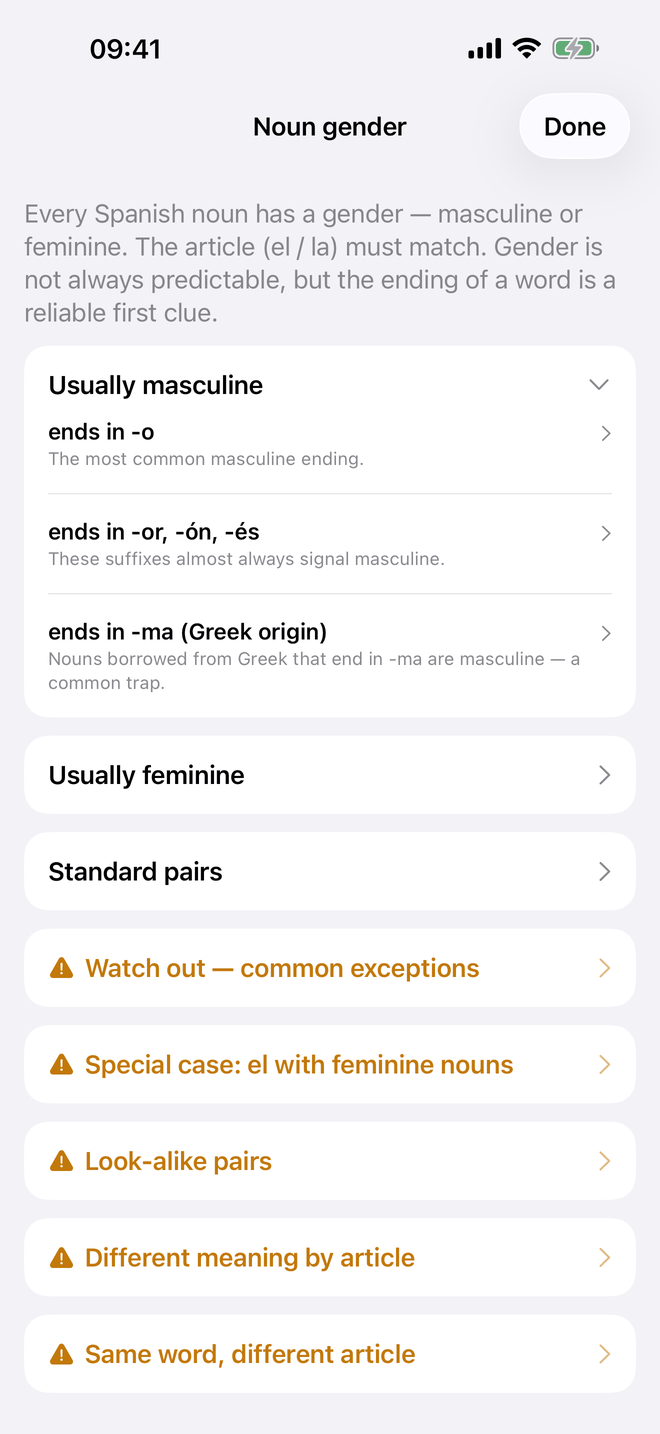
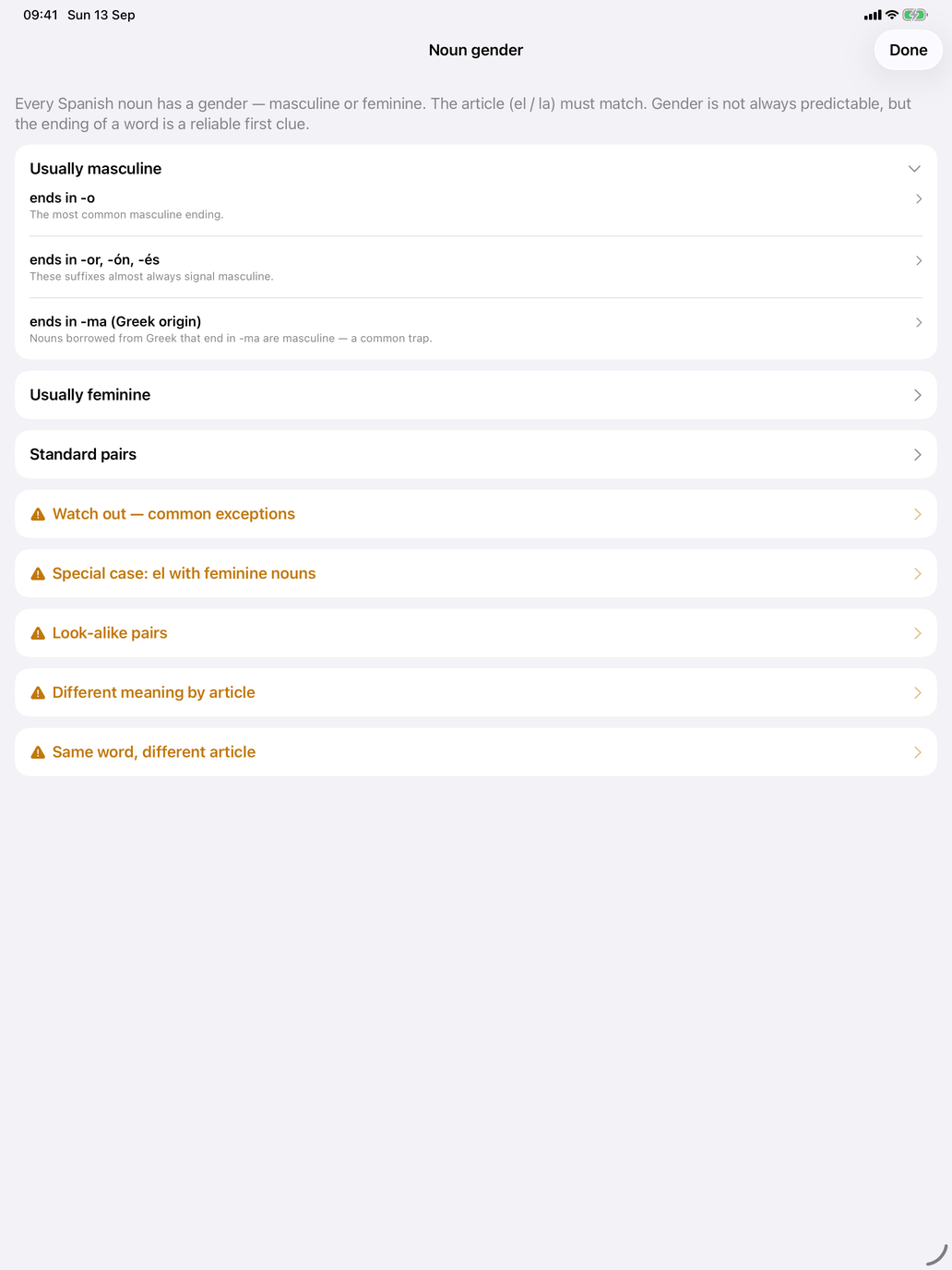
The app has no separate screen for these nouns any more. They are explained in the last sections of Noun gender, which also opens as a sheet from the ? button in the Alternate gender pairs drill (tap Done to close it). Two sections belong together:
- Different meaning by article — one word with two unrelated meanings, where only the article tells you which is meant.
- Same word, different article — one word used for both genders with the same meaning (el / la dentista, el / la estudiante). Only the article changes.
Read side by side, the two sections show the contrast: in the first the meanings differ, in the second they don't.
The app has eleven nouns whose meaning changes with the article:
| Noun | el | la |
|---|---|---|
| capital | capital (money) | capital (city) |
| coma | coma | comma |
| cometa | comet | kite |
| corte | cut | court (royal) |
| cura | priest | cure |
| cólera | cholera | anger, wrath |
| editorial | editorial (opinion piece) | publishing house |
| frente | front (military, weather) | forehead |
| orden | order (arrangement) | order (command) |
| papa | Pope | potato |
| pendiente | earring | slope |
These lists always show the whole catalogue, whatever you have selected.
Why this matters. You usually meet a noun with one gender, so a noun that takes either article is disorienting. Both sentences below are grammatical, but they say different things:
- Hay un orden — there is an order (a sequence).
- Hay una orden — there is an order (someone has given a command).
To practise these nouns, use Meaning changes with gender.