Adverbs
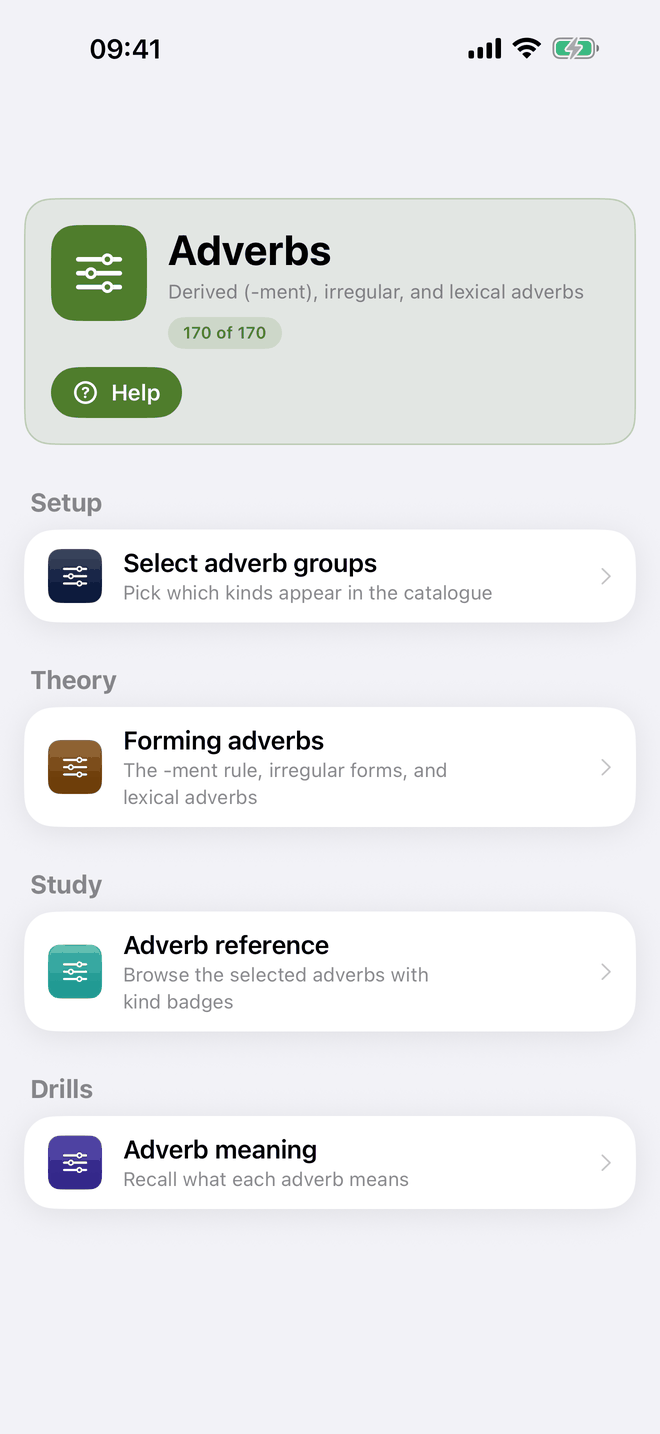
The Adverbs hub covers French adverbs of three kinds: the derived adverbs built from an adjective with -ment, the irregular ones that come from an adjective but not by the plain rule, and the lexical adverbs that have no adjective behind them. The catalogue has about 170 adverbs.
Open Self Study → Adverbs. The hub has:
- Setup — Select adverb groups: choose which kinds appear.
- Theory — Forming adverbs: the -ment rule, the irregular forms and the lexical adverbs.
- Study — Adverb reference: the selected adverbs, with a badge for the kind.
- Drills — Adverb meaning: flashcards for the meaning of the selected adverbs.
The line under the hub title shows how many adverbs your kind selection gives you, out of the whole catalogue. In this hub only the kinds you tick decide the selection; the level and topic filters in Select word scope are not applied.
A recommended workflow. Read Forming adverbs once — the -ment rule is mechanical and needs no drilling. Then spend your time on Adverb meaning with Lexical and Irregular ticked: those are the adverbs you have to learn as words.
Select adverb groups
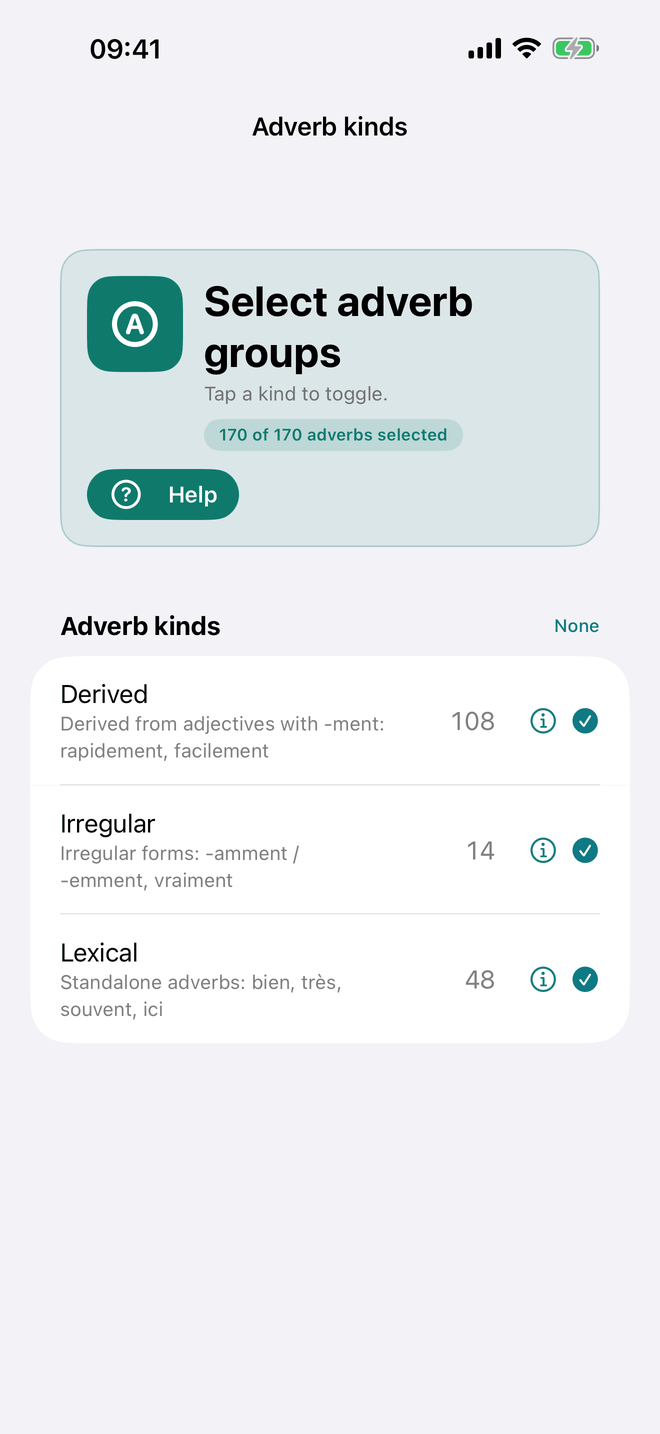
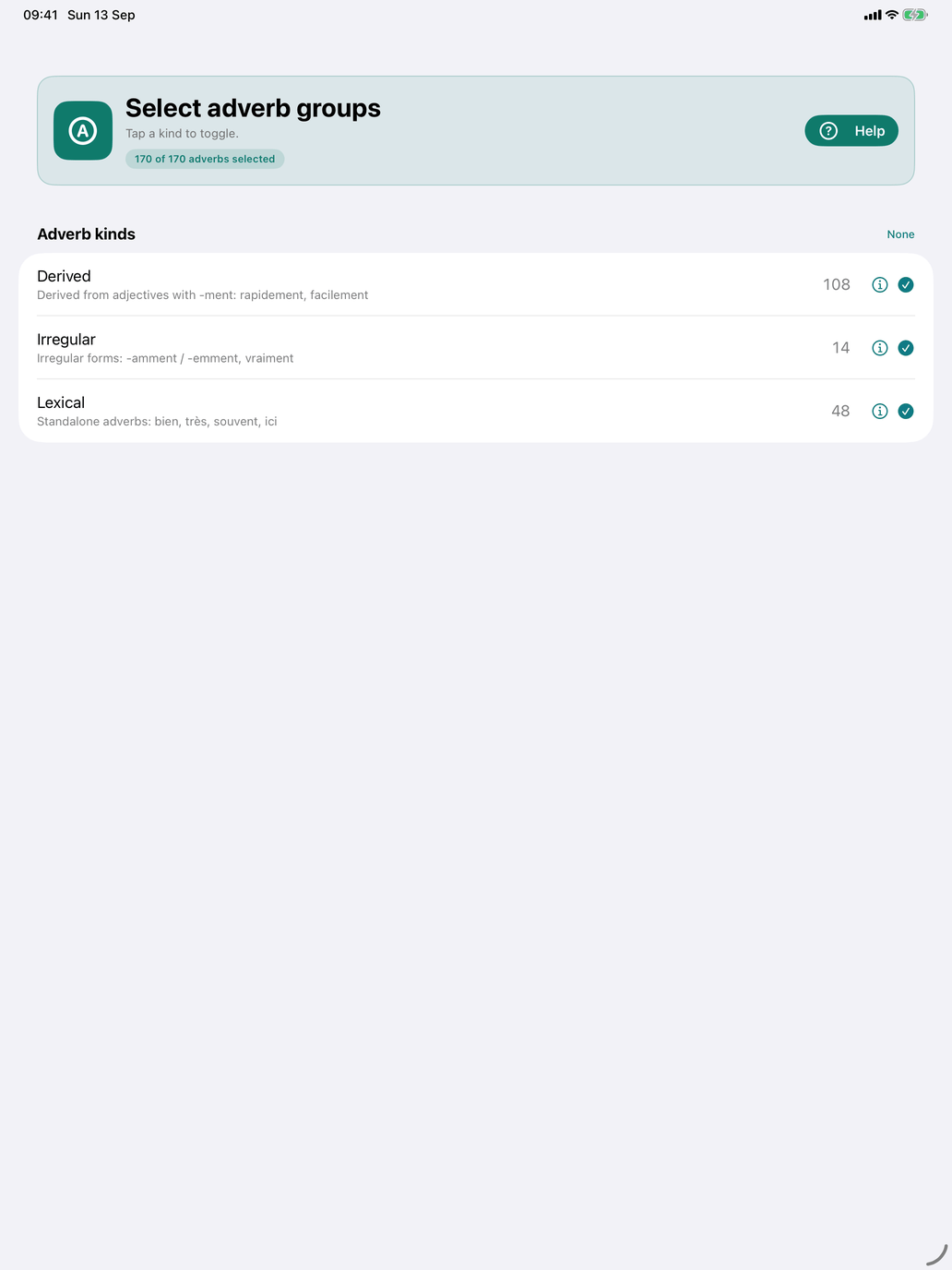
Three kinds:
- Derived — the feminine of the adjective plus -ment: lent → lente → lentement, heureux → heureuse → heureusement. The largest group.
- Irregular — from an adjective, but not by the plain rule: constant → constamment, évident → évidemment, and vrai → vraiment, absolu → absolument.
- Lexical — no visible adjective behind them: bien, mal, vite, très, souvent, toujours, déjà, ici, là.
Tap a kind to switch it on or off; each row shows its size and a few examples. Tap ⓘ for an explanation and the list of adverbs of that kind. The line at the top shows how many adverbs you selected.
Forming adverbs
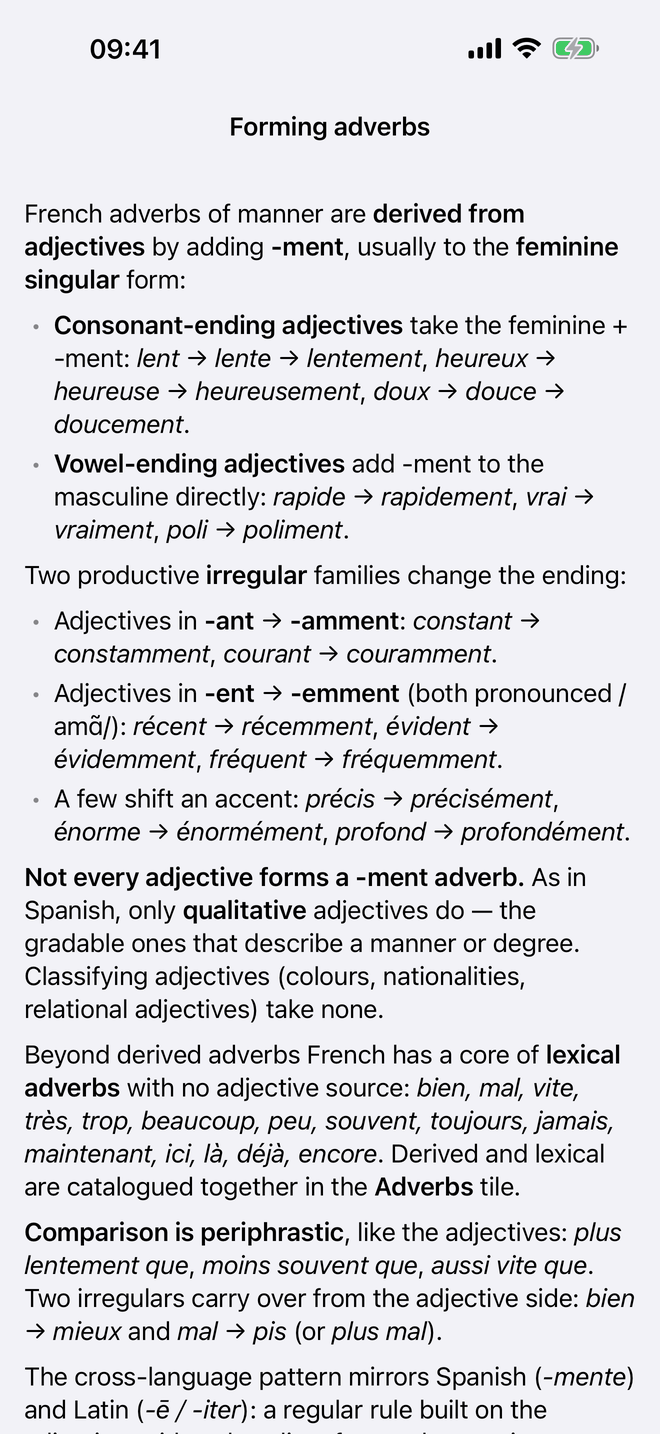
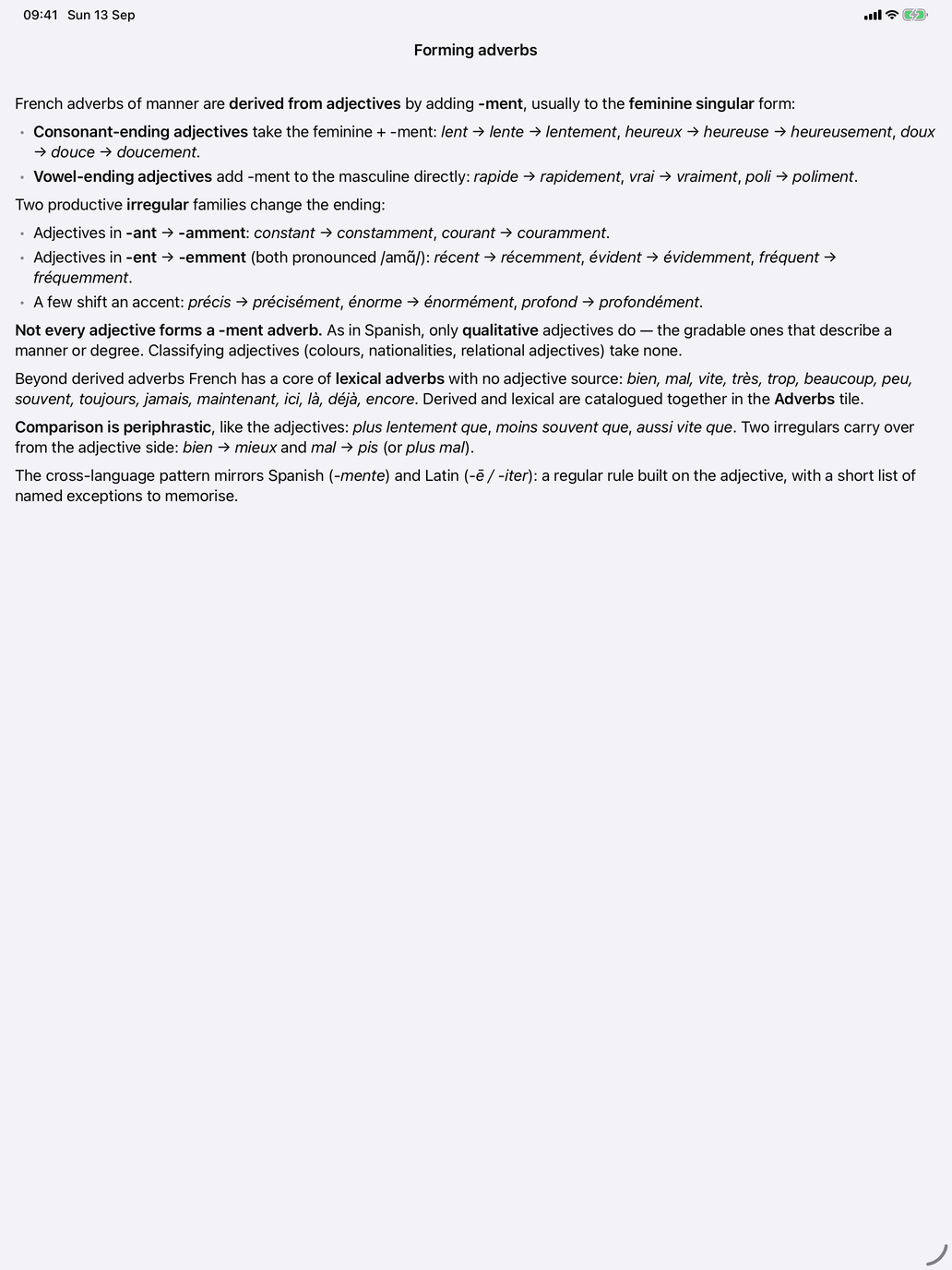
A reference page; nothing is recorded.
French adverbs of manner are made from adjectives with -ment, usually added to the feminine singular:
- An adjective ending in a consonant uses its feminine: lent → lente → lentement, heureux → heureuse → heureusement, doux → douce → doucement.
- An adjective ending in a vowel adds -ment to the masculine: rapide → rapidement, vrai → vraiment, poli → poliment.
The irregular families change the ending:
- -ant → -amment: constant → constamment, courant → couramment.
- -ent → -emment: récent → récemment, évident → évidemment. Both endings are pronounced the same, -amment.
- A few take an accent: précis → précisément, énorme → énormément, profond → profondément.
Not every adjective has a -ment adverb: mainly the ones that describe a quality or a manner do.
Besides these, French has a core of lexical adverbs with no adjective source: bien, mal, vite, très, trop, beaucoup, peu, souvent, toujours, jamais, maintenant, ici, là, déjà, encore.
Comparison uses plus, moins and aussi: plus lentement que, moins souvent que, aussi vite que. Bien has its own comparative, mieux.
Adverb reference
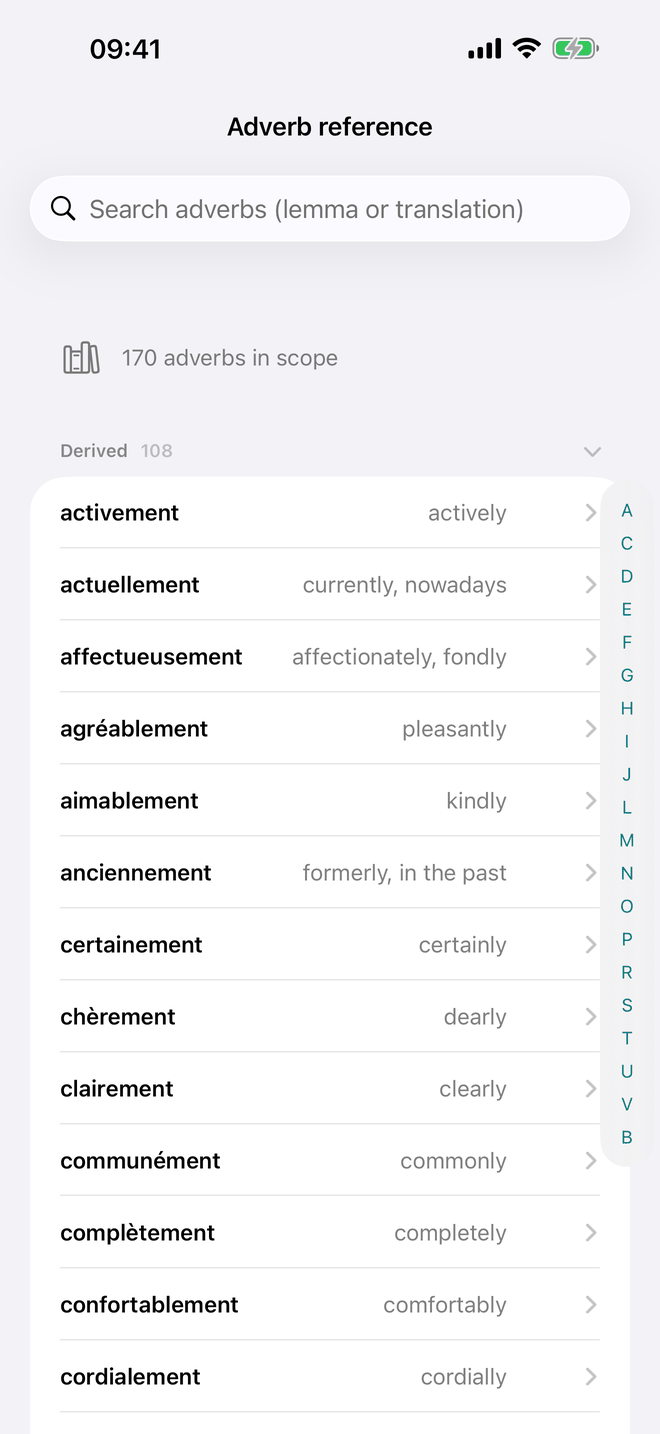
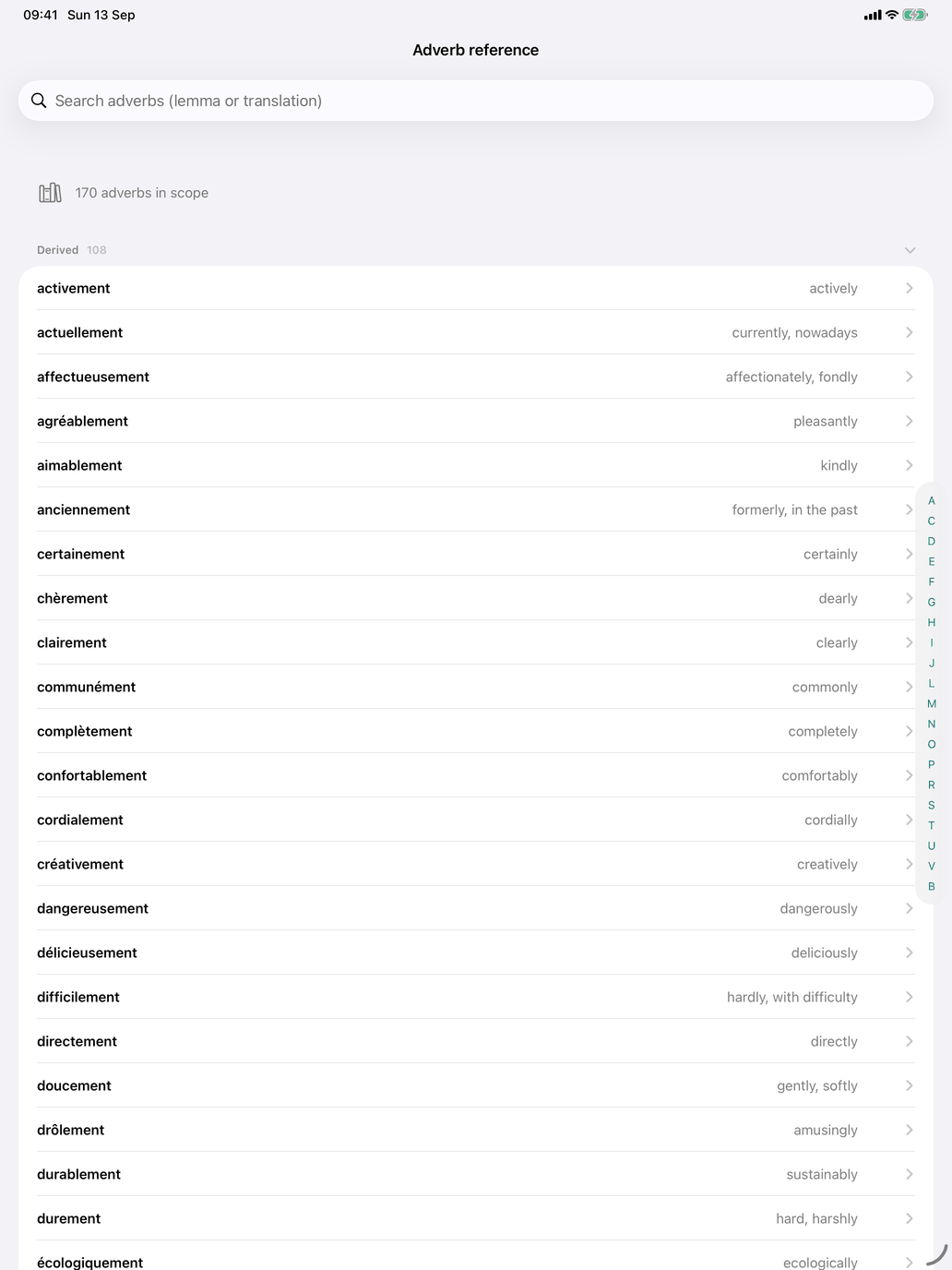
A browse-only list of the selected adverbs with their translations, in sections for Derived, Irregular and Lexical, with a search field. Irregular adverbs carry an irr. badge and lexical adverbs a lex. badge. Nothing is recorded.
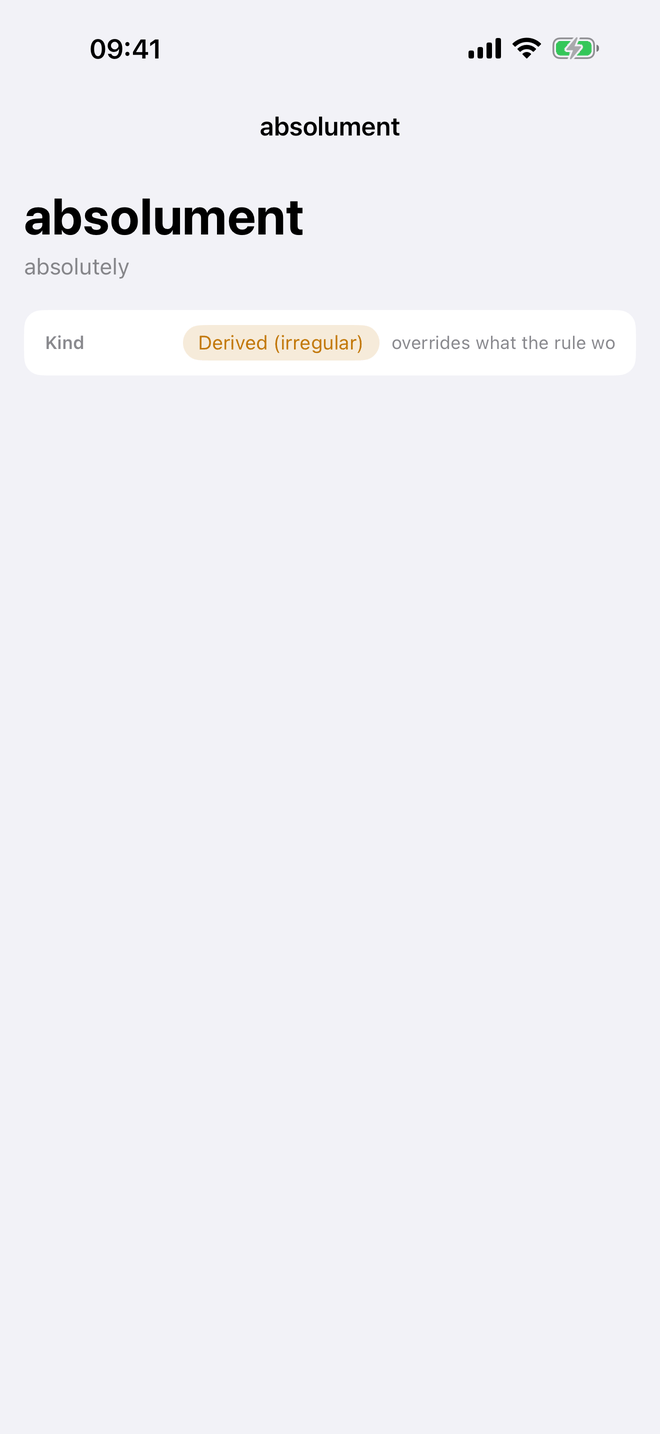
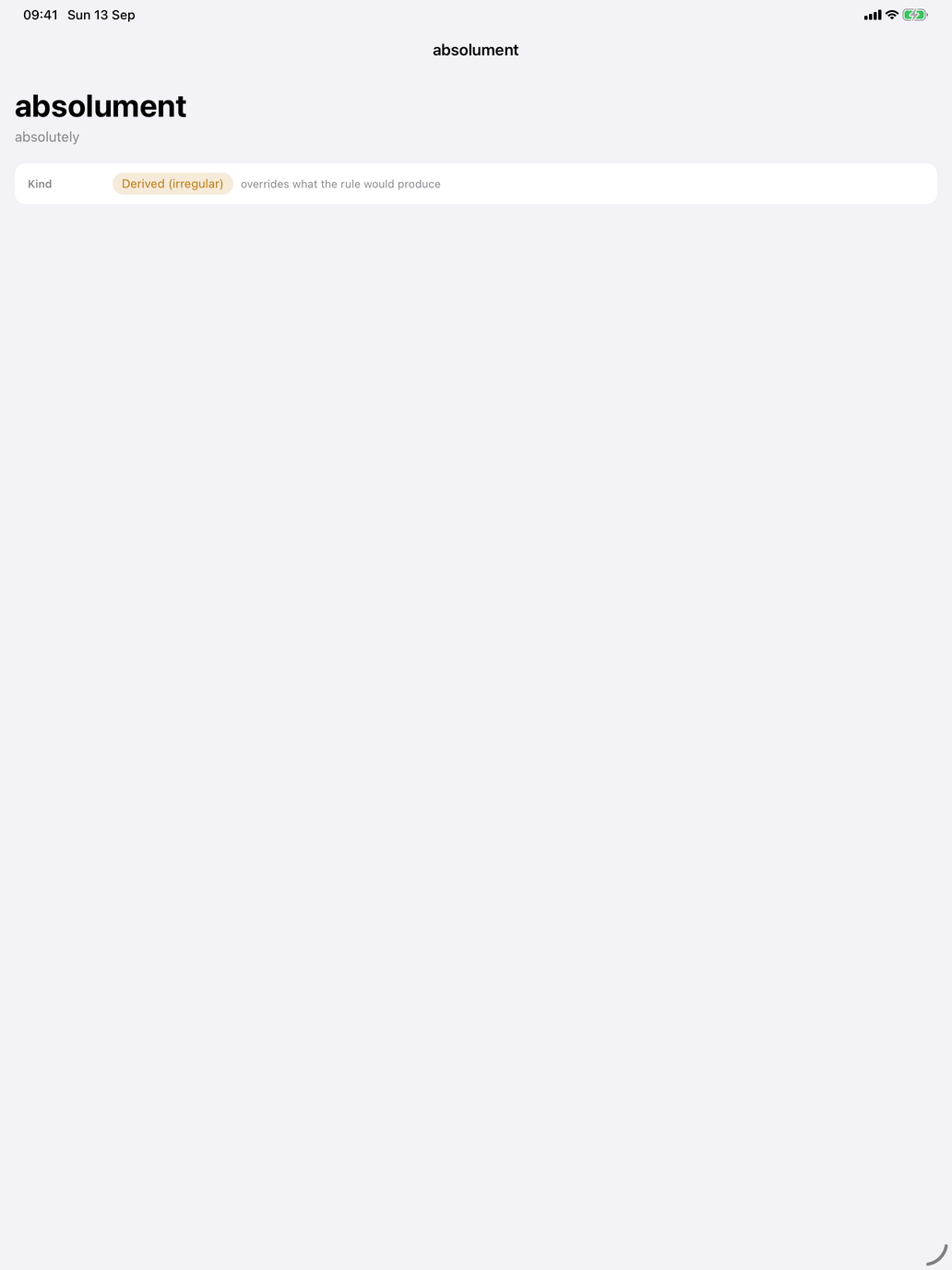
Tap an adverb to open its page: the adverb and its translation, its Kind (Derived (regular), Derived (irregular) or Lexical) and, for a derived adverb, a From row naming the adjective it comes from. Tap that row to open the adjective.
Adverb meaning
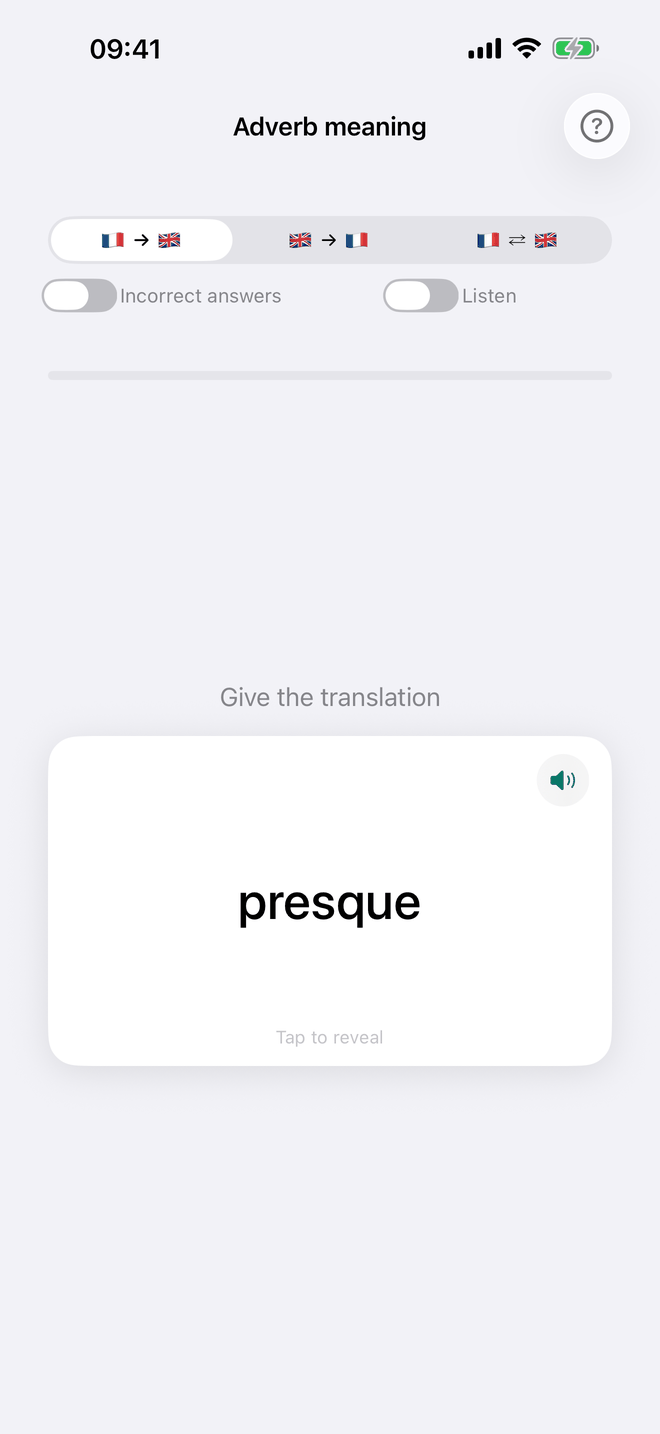
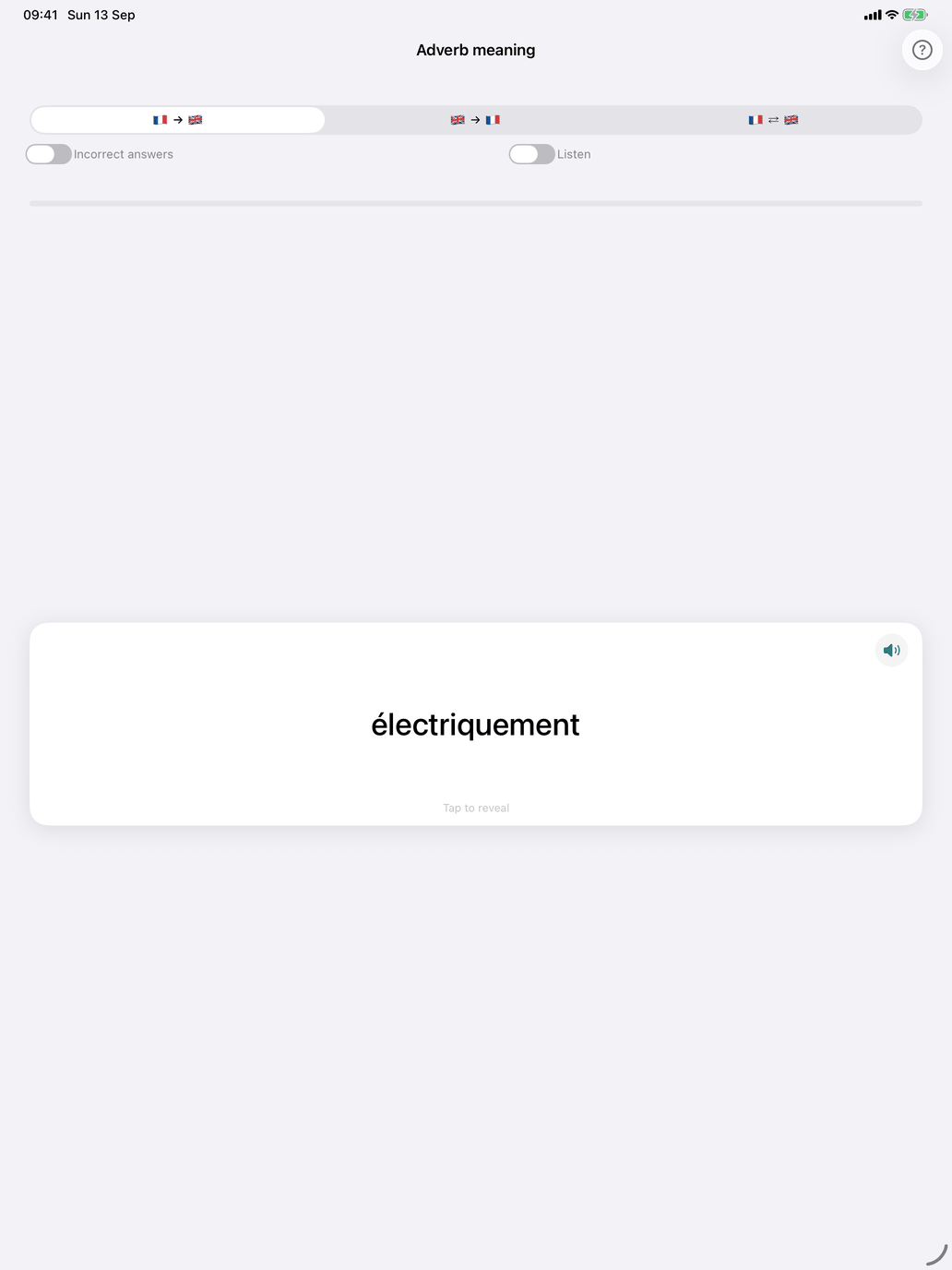
A flashcard deck for the meaning of the selected adverbs, in either direction. It works like Noun meaning. Every answer is recorded.