Adverbs
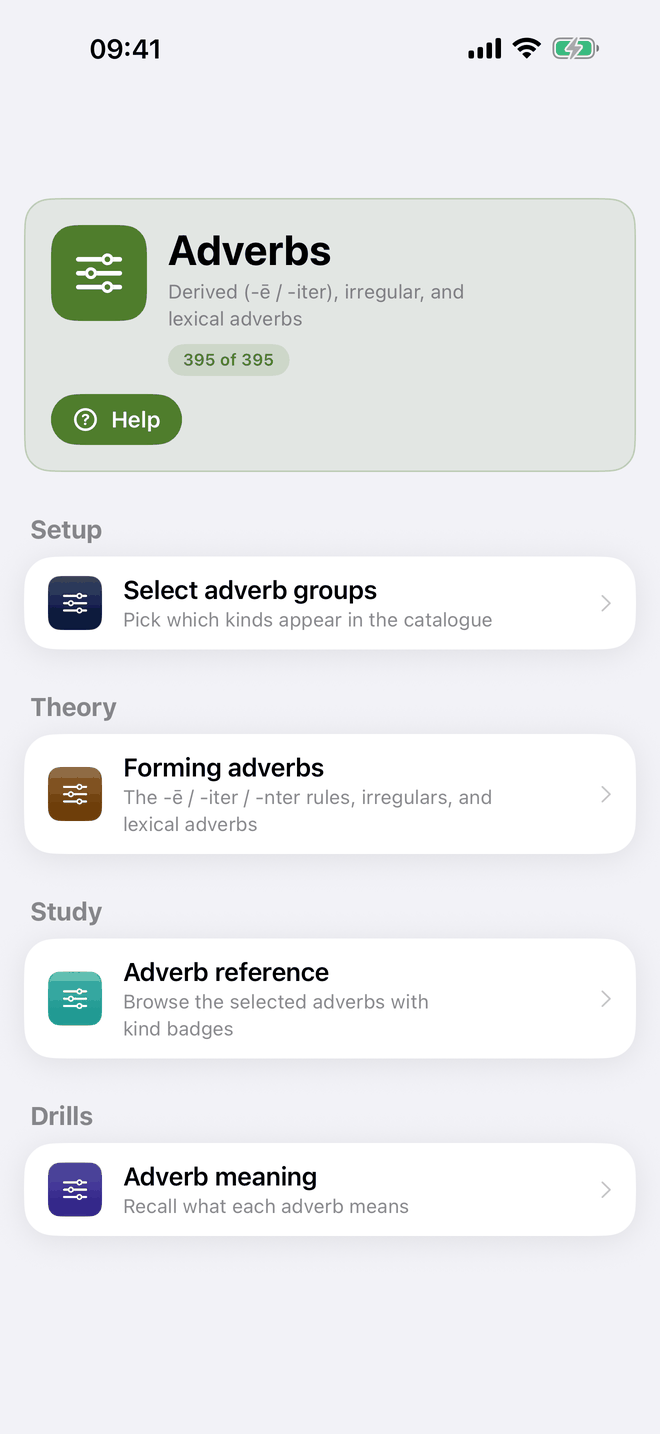
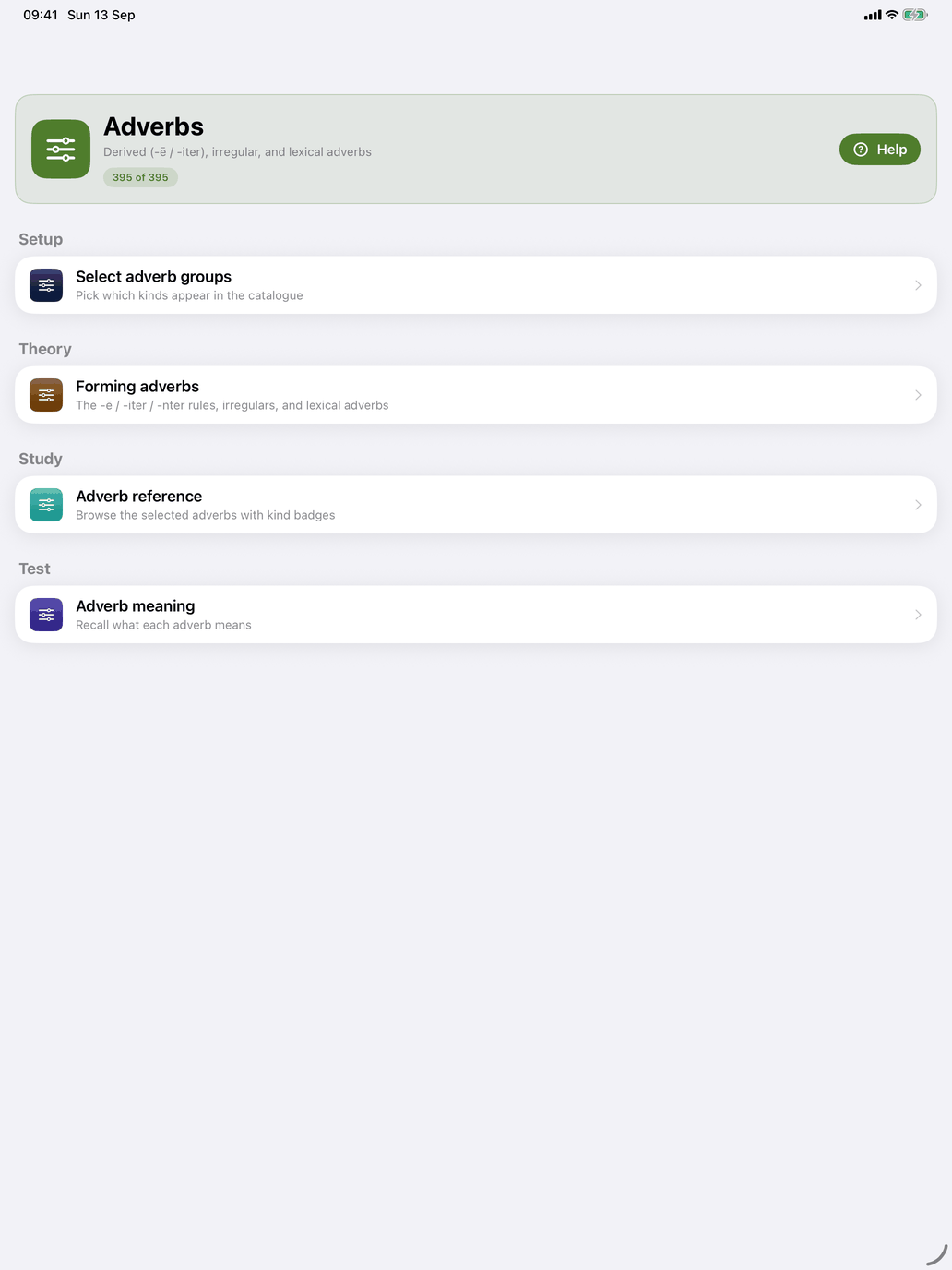
The Adverbs hub has almost 400 Latin adverbs of three kinds:
- Derived: built from an adjective. Adjectives of the 1st/2nd declension take -ē (longus → longē, pulcher → pulchrē). 3rd-declension adjectives take -iter (fortis → fortiter). Stems ending in -nt- take -nter (prūdēns → prūdenter). Over 300 adverbs are of this kind.
- Irregular: built from an adjective, but not by the rule: bene, male, magnopere, multum, paulum.
- Lexical: not built from an adjective. These include place words (hīc, ibi), time words (nunc, semper, crās), degree words (valdē, paene) and connecting words (etiam, autem). There are over 70.
The hub has these screens:
- Select adverb groups (Setup): tick the kinds you want. Tap ⓘ on a kind for an explanation and the adverbs of that kind.
- Forming adverbs (Theory): the -ē / -iter / -nter rules, the irregular adverbs, and how the comparative and superlative work (fortius, fortissimē; bene → melius → optimē).
- Adverb reference (Study): the selected adverbs, each marked with its kind. The detail screen for a derived adverb shows the adjective it comes from.
- Adverb meaning (Drills): flashcards for the meaning of each adverb.
There is no form drill for adverbs. Once you know the rule, derived adverbs are predictable, so the drill tests meaning only.