Singular / Plural
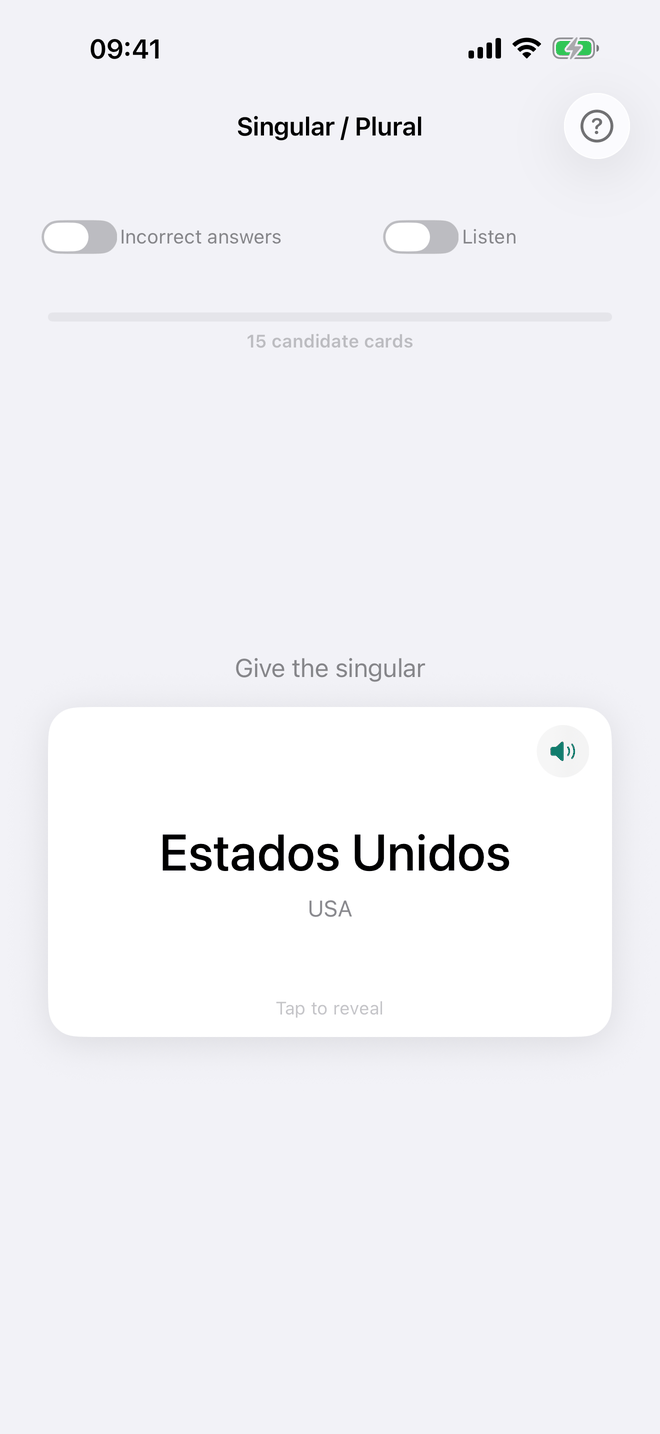
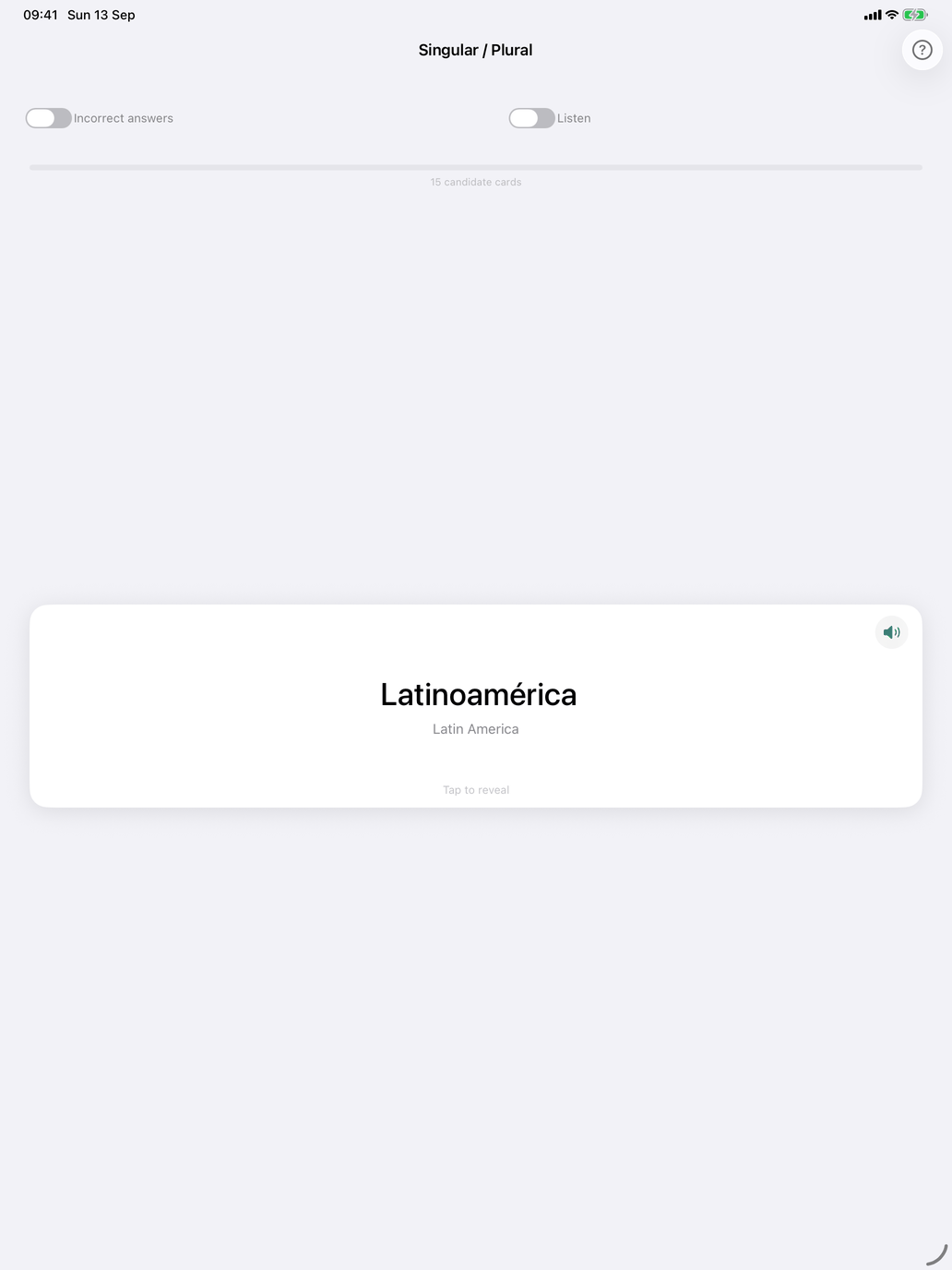
Singular / Plural is a flashcard drill for number. It uses the nouns in your selection that have an article and a plural.
How a card works
- The card shows a noun with its article and its translation. The instruction above it says what to do: Give the plural (the card shows la canción) or Give the singular (the card shows las canciones). The direction is chosen at random for each card.
- Say the answer to yourself — article included — and tap the card to turn it.
- Grade yourself: swipe right if you were right and left if not. On the Mac, and with VoiceOver on, use the Wrong and Correct buttons.
The speaker button reads aloud the side you are looking at.
Special cards
- Invariable nouns (el lunes, los lunes): the answer side notes Singular and plural are identical.
- Plural-only nouns (los pantalones): the card always shows the plural and asks for the singular. The answer is "—", with the note Always plural — no singular form.
- Collective plurals (los tíos): the answer shows both singulars, el tío / la tía.
Mass nouns, which have no plural, and nouns without an article are left out.
What the drill covers. Depending on your selection, you meet:
- vowel endings: libro → libros
- consonant endings: flor → flores, mes → meses
- -z → -ces: luz → luces, lápiz → lápices
- accent shifts: examen → exámenes, canción → canciones
- unchanged plurals: el lunes → los lunes, el paraguas → los paraguas
To drill one pattern, select only its group under Plural formation in Select noun groups.
The session. A session asks the number of questions set in Questions per session (Settings → Study). The nouns are picked from your selection based on your answer history and your Learning pace. A card you mark wrong can come back later in the same session. The Incorrect answers switch limits the session to nouns you have got wrong here before. At the end, tap New session. Every answer is recorded against the noun.
Tips
- Read Plural formation first. The drill is there to make the rules automatic, not to teach them.
- The accent-shift cases (examen → exámenes) are the most useful part. Most learners pick up -s / -es / -ces quickly but misspell the accented forms.