Être or avoir
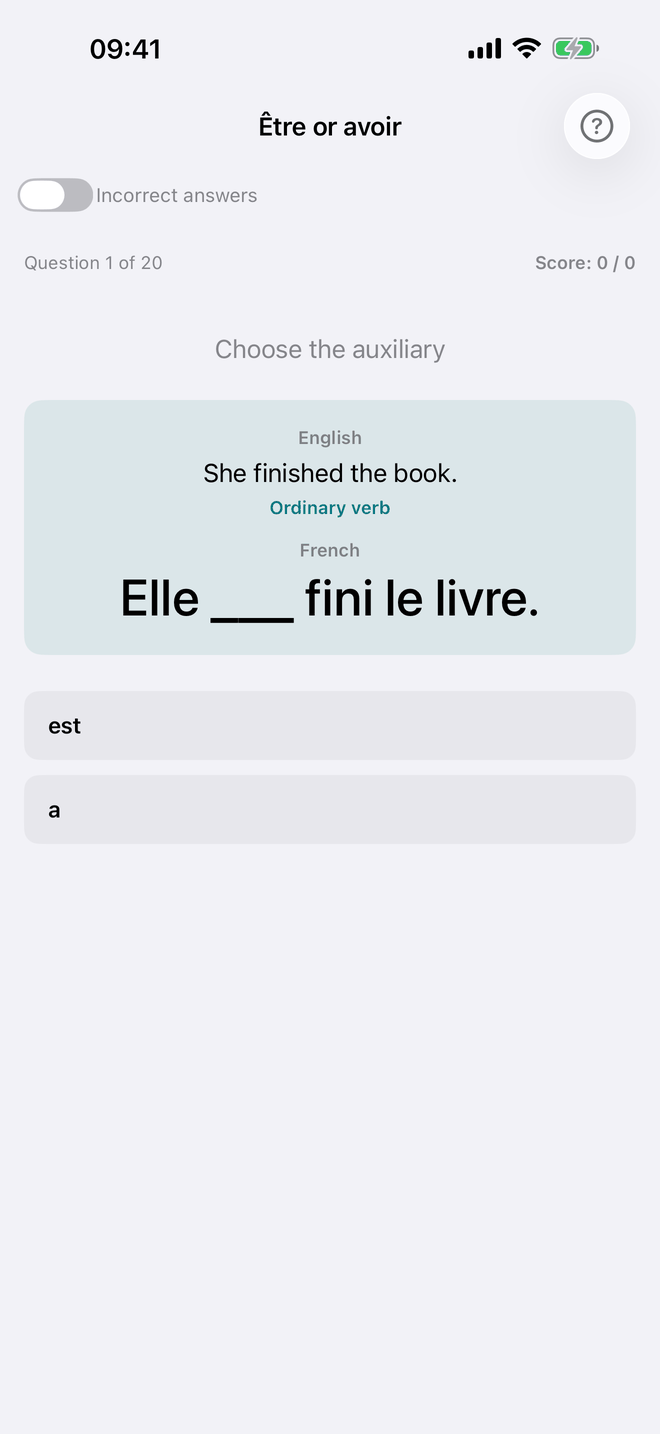
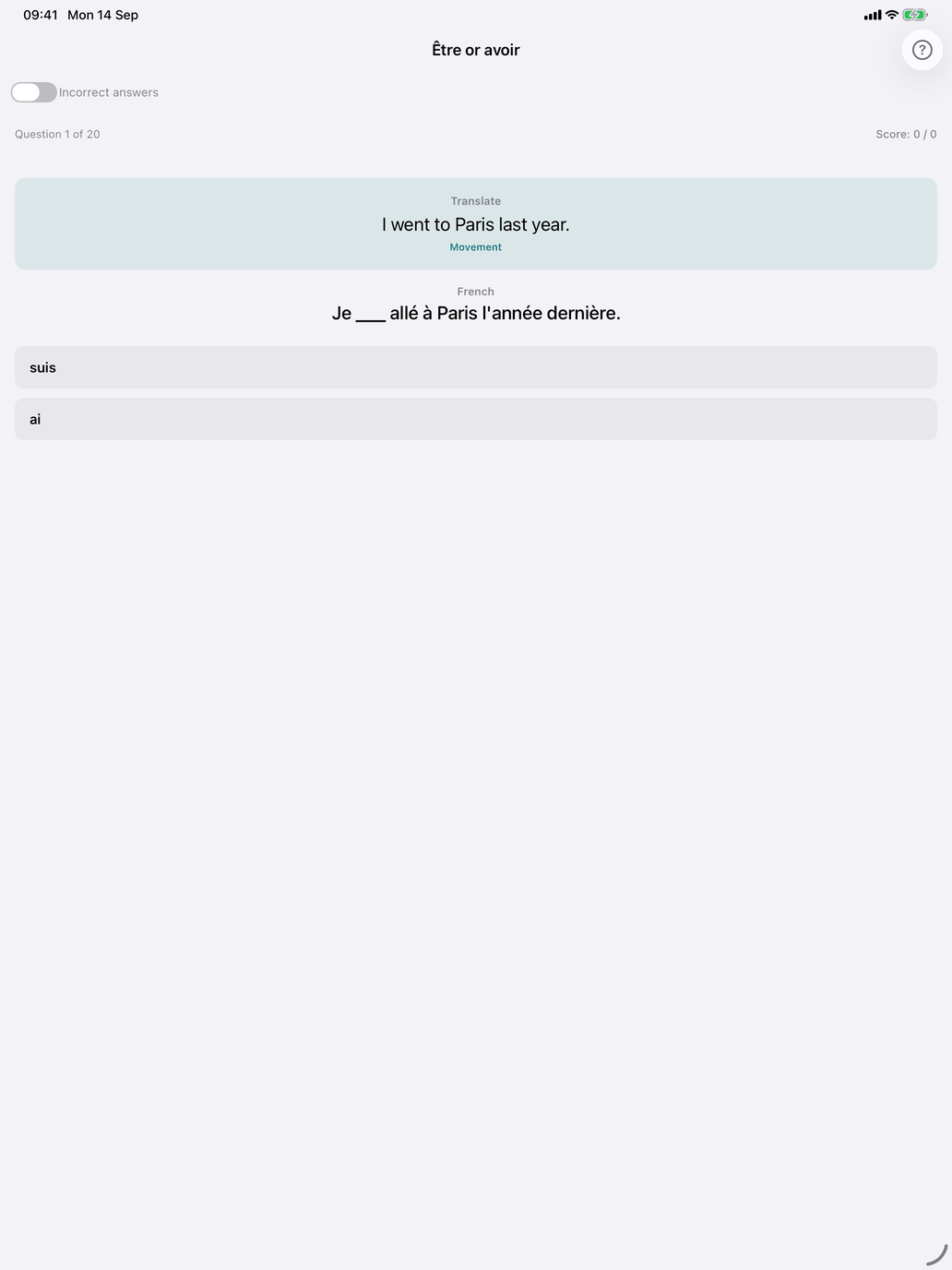

Every compound tense needs an auxiliary, and in French it is either avoir or être. The conjugation drills supply the whole compound form, auxiliary included; this drill asks you to choose the auxiliary.
How a question looks. Under the instruction "Choose the auxiliary", the card shows the sentence in your language, with a badge naming the rule at work. Below it comes the French sentence with a gap:
She came at eight o'clock. Movement French: Elle ___ venue à huit heures.
The two options are the two auxiliaries in the right person (est / a, sommes / avons). The participle is already written, and already agrees where it must (venue), so the auxiliary is the only thing asked. Tap one to answer; a card then explains the choice.
The four rules in the deck.
- Movement — the short list of verbs of movement and change of state that take être: aller, venir, partir, arriver, rester, tomber, naître, mourir and their relatives (revenir, devenir). J'ai allé is the most common auxiliary mistake in French.
- Pronominal — every verb with me, te, se … takes être, with no exceptions: je me suis levé, elle s'est lavé les mains, even though laver on its own takes avoir. The pronoun is the clue.
- Takes an object — monter, descendre, sortir, rentrer and passer take être on their own and avoir with a direct object, and the meaning shifts: il est sorti (he went out), il a sorti la poubelle (he took out the bin); elle est montée (she went up), elle a monté la valise (she carried the suitcase up). The French sentences look almost the same, so the object and the sentence in your language decide.
- Ordinary verb — everything else takes avoir: j'ai mangé, elle a fini, nous avons dormi. It also covers verbs of movement that are not on the list: il a marché, elle a voyagé, j'ai couru.
Almost half the answers are avoir. A deck where être was always right would teach you to answer être by default.
What's recorded. Each rule is recorded separately, so a rule you keep missing, such as Takes an object, comes back more often.