Alternate gender pairs
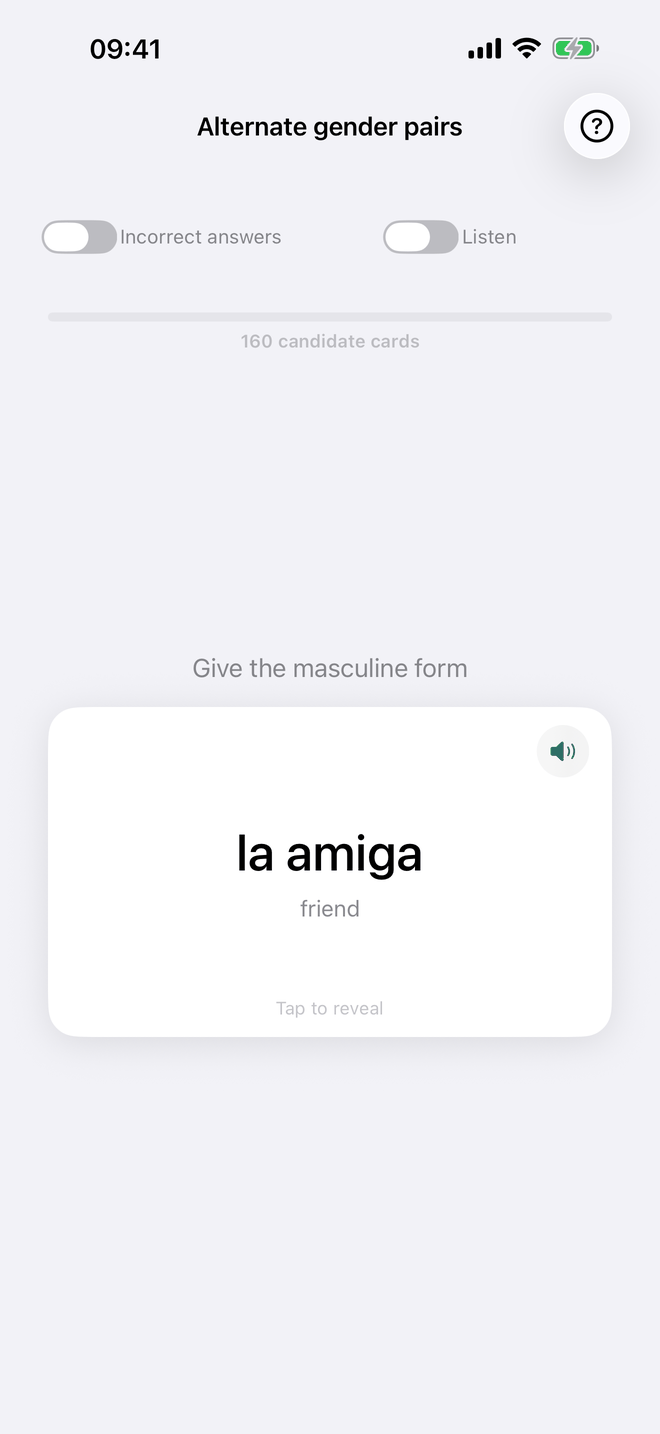
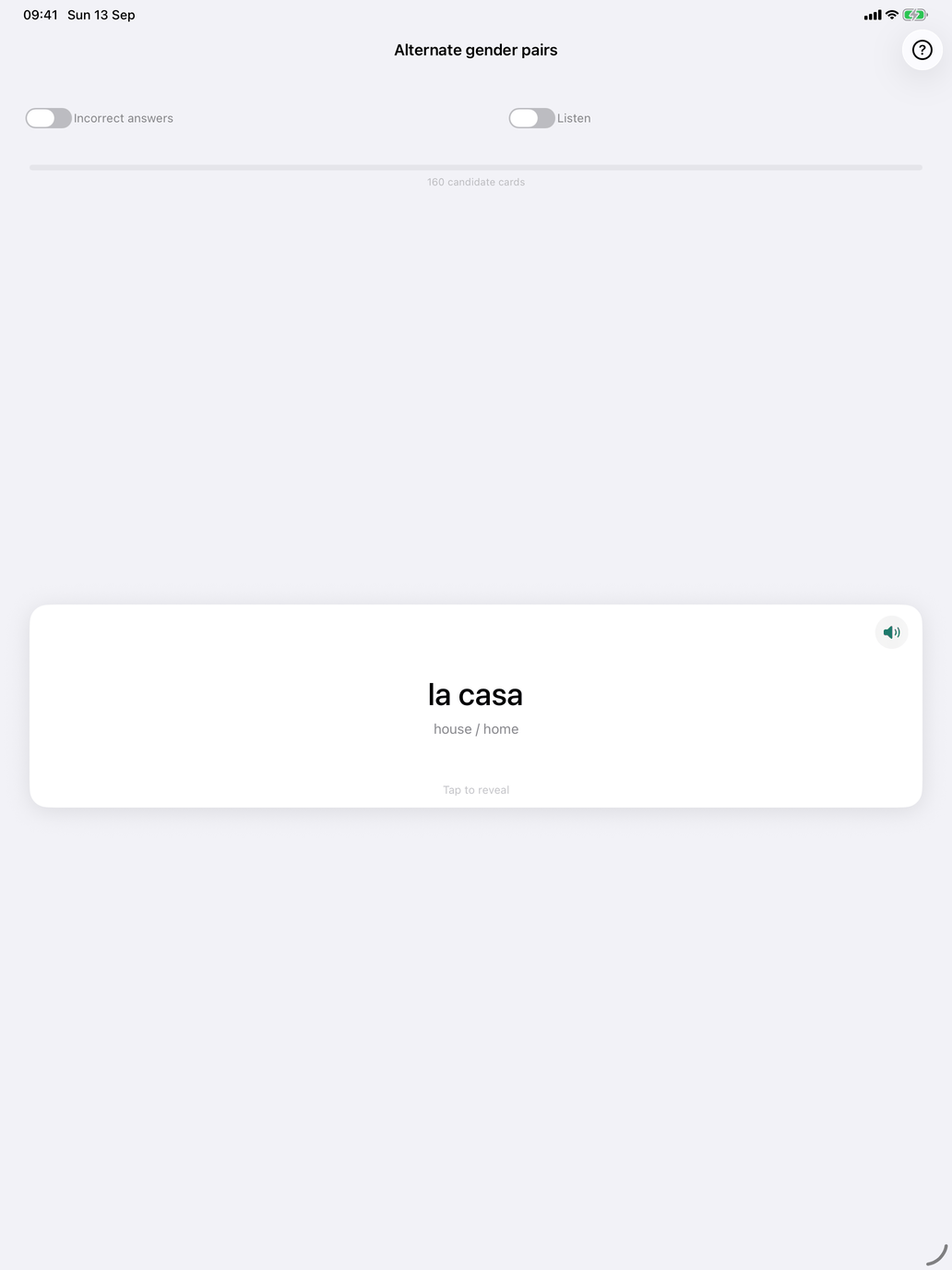
Alternate gender pairs asks for the other gender of a noun: given el abogado, what is the feminine? Given la tía, what is the masculine?
How a card works
- The card shows a noun with its article and translation. The instruction above it says Give the feminine form or Give the masculine form.
- Say the answer, with its article, and tap the card to turn it.
- Grade yourself: swipe right if you were right and left if not. On the Mac, and with VoiceOver on, use the Wrong and Correct buttons.
The answer side shows the other form with its article and translation. Some cards add a note:
- Epicene nouns (el / la dentista): The word doesn't change — only the article.
- Nouns whose meaning changes (el / la capital): The meaning changes with gender. The two translations show the difference.
- Trick cards: about one card in five is a noun with only one gender. The right answer is that there is no other form. The answer side shows "—" and a note saying the noun is masculine (or feminine) only, with no opposite-gender form. These cards make sure you read the noun rather than assume there is always a pair.
Which nouns appear. This drill does not follow your selection. It uses every noun in the catalogue that has both a masculine and a feminine form, plus a limited number of common single-gender nouns for the trick cards. Nouns used only in the plural and nouns without an article are left out.
The session. A session asks the number of questions set in Questions per session (Settings → Study), picked based on your answer history and your Learning pace. A card you mark wrong can come back later in the same session. The Incorrect answers switch limits the session to nouns you have got wrong here before. Every answer is recorded against the noun.
Help. The ? button at the top opens the Noun gender screen as a sheet, so you can check a rule mid-session. Tap Done to return to the drill.
When to use it. Once you know the ordinary gender of the nouns. Look at Standard pairs and Same word, different article in Noun gender first.