Prepositions
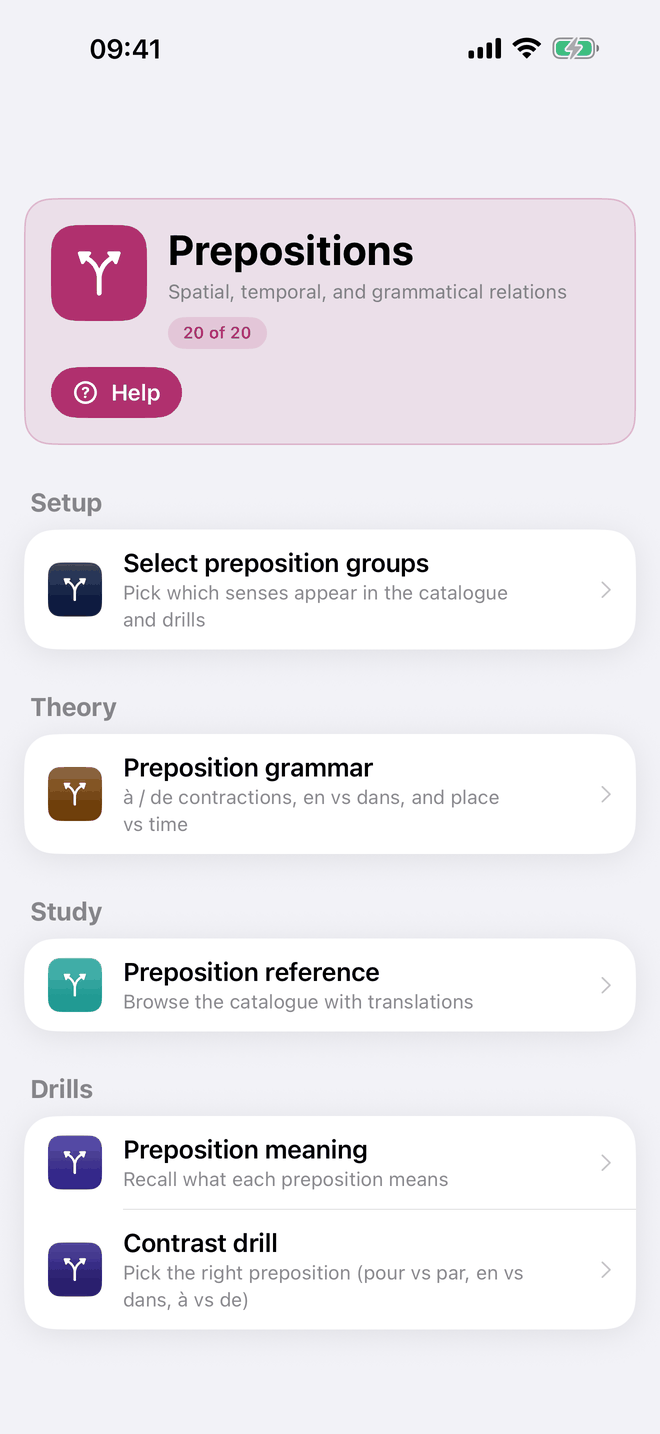
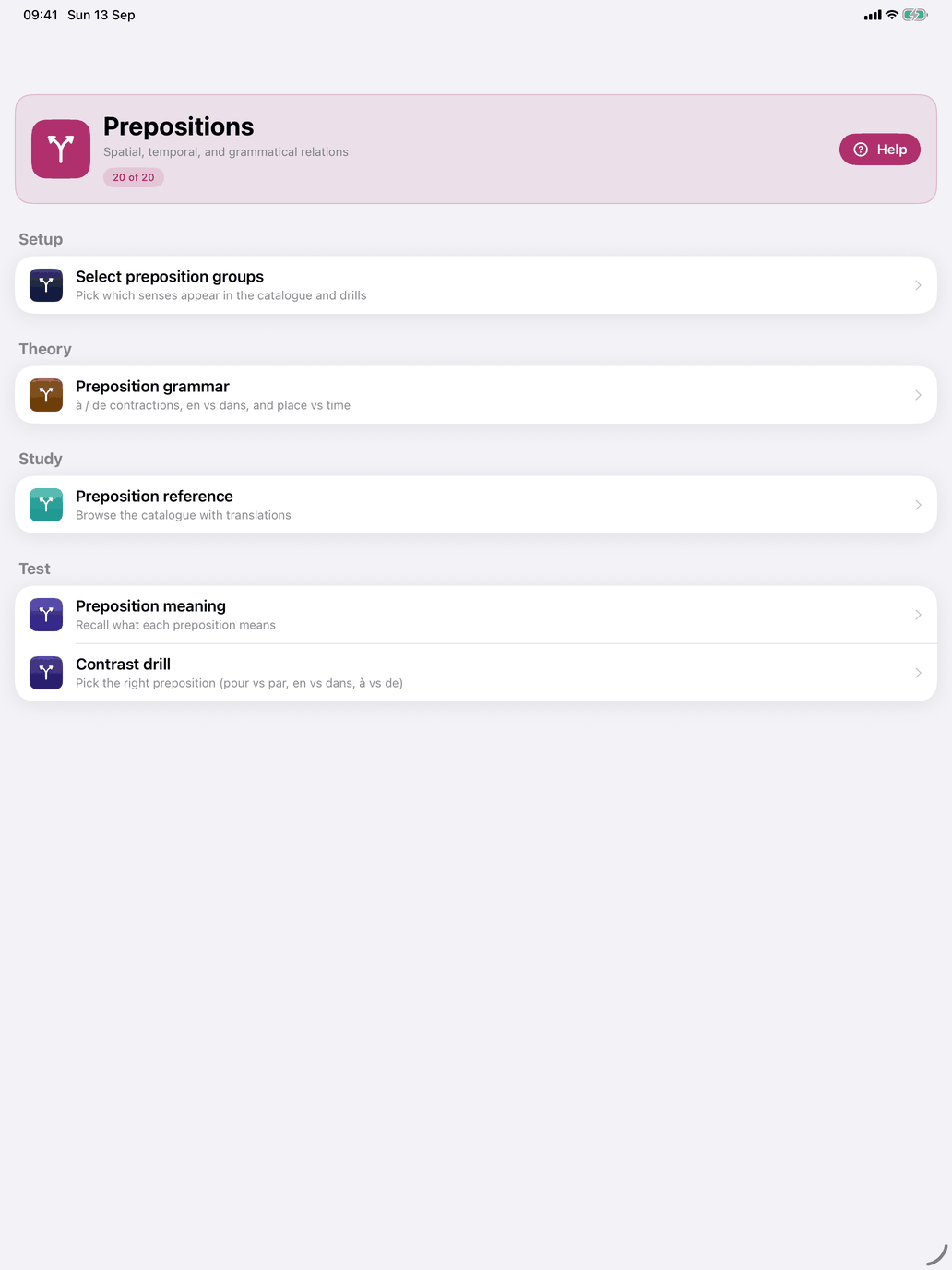
The Prepositions hub covers twenty common French prepositions. French prepositions don't change form, so instead of tables the hub concentrates on meaning, on the forced contractions of à and de, and on the pairs learners confuse: pour and par, en and dans, à and de, depuis and pendant.
Open Self Study → Prepositions. The hub has:
- Setup — Select preposition groups: choose which senses appear.
- Theory — Preposition grammar: à / de contractions, en against dans, and place against time.
- Study — Preposition reference: the selected prepositions with their translations.
- Drills:
- Preposition meaning — flashcards for the meaning of the selected prepositions.
- Contrast drill — pick the right preposition (pour or par, en or dans, à or de, depuis or pendant).
The line under the hub title shows how many prepositions your sense selection gives you, out of the whole catalogue. Only the senses you tick decide the selection; the level and topic filters in Select word scope are not applied here.
A recommended workflow
- Tick all senses and run Preposition meaning to learn the twenty prepositions.
- Spend most of your time on the Contrast drill.
- To focus on one pair, narrow the senses: Time alone, for example, keeps the en / dans and depuis / pendant questions.
Select preposition groups
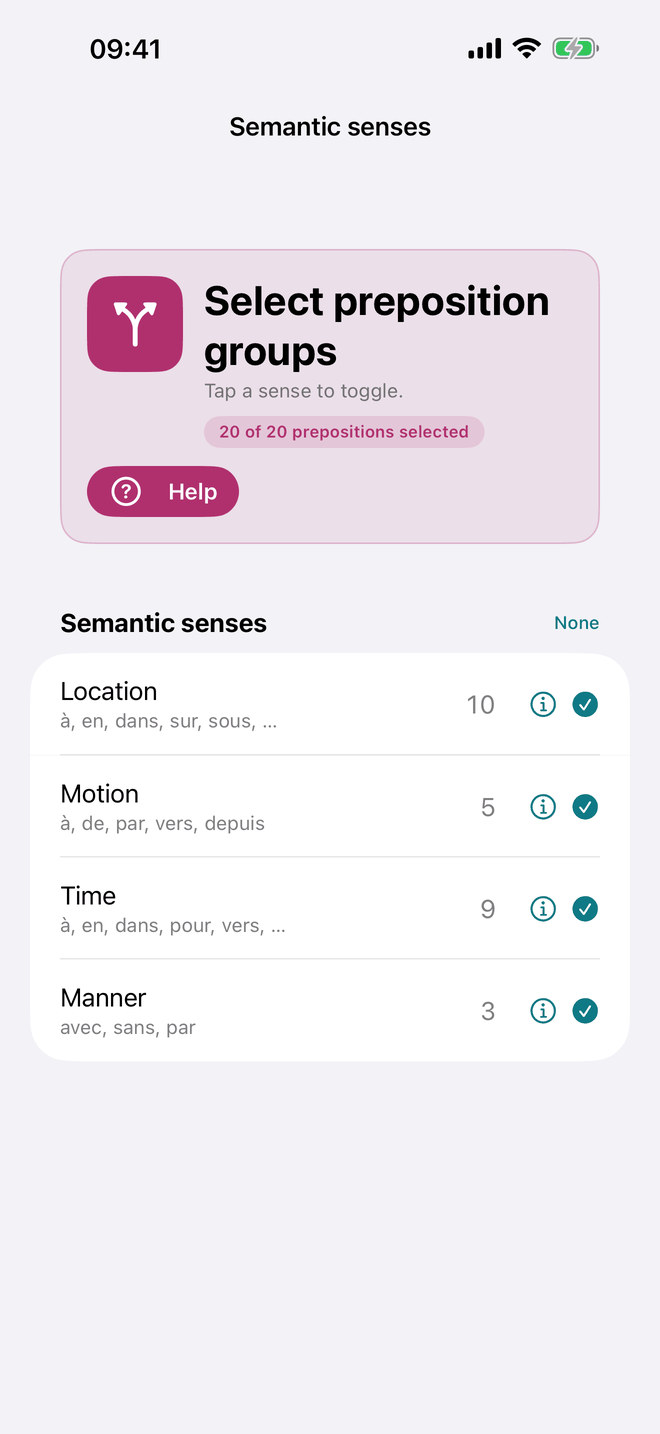
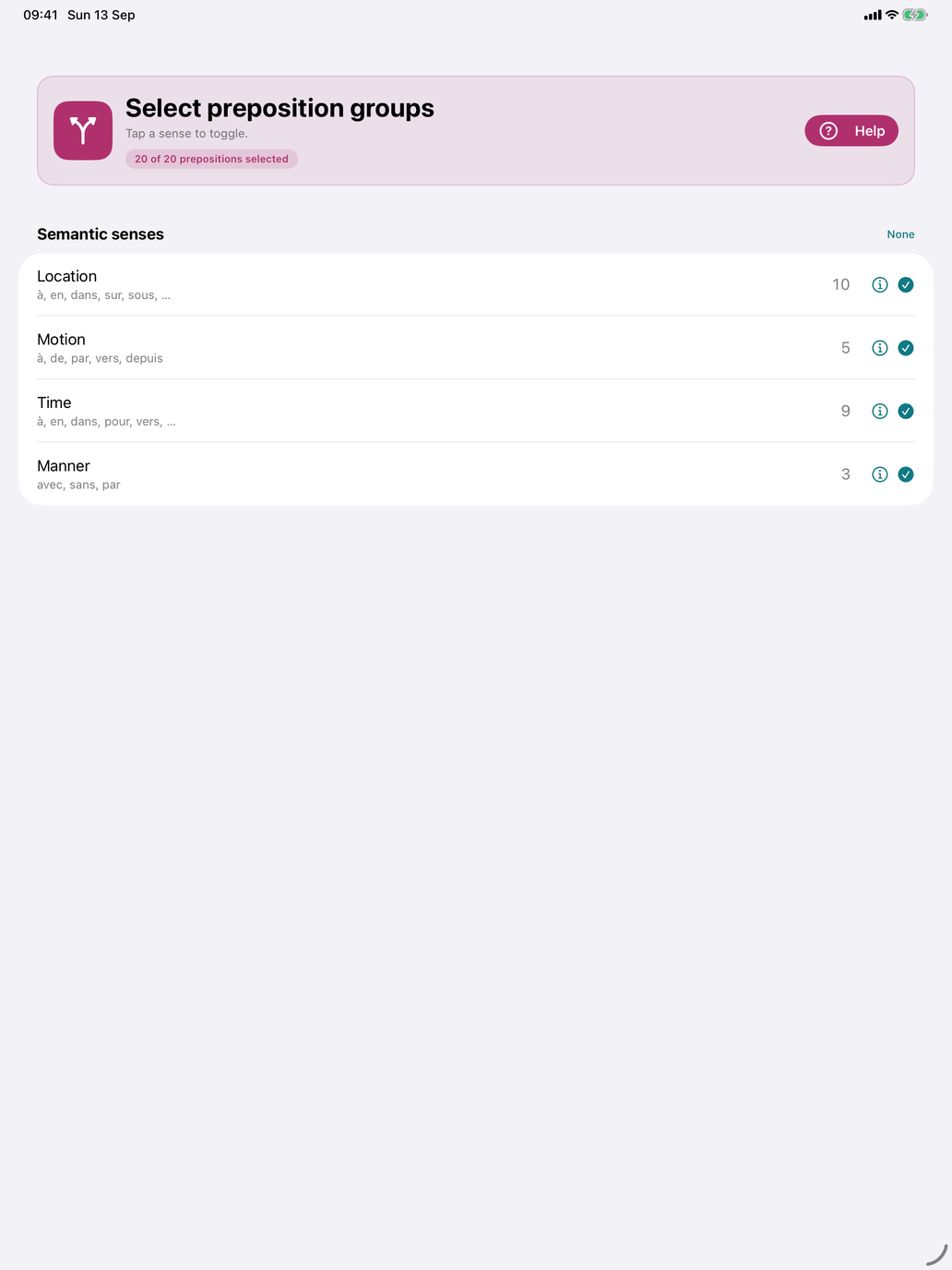
Each preposition is tagged with one or more senses, and a preposition is in your selection when any of its senses is ticked. The screen shows four senses:
- Location — where something is: dans, sur, sous, devant, derrière, entre, chez, contre, and à and en for towns and countries.
- Motion — the path: à (destination), de (origin), vers (direction), par (the way through), depuis (starting point).
- Time — when and how long: à, en, dans, depuis, pendant, pour, vers, avant, après.
- Manner — how: avec, sans, par.
Tap a sense to switch it on or off; each row shows its size and the first few prepositions. Tap ⓘ for an explanation of the sense and its prepositions. The line at the top shows how many prepositions you selected.
Preposition grammar
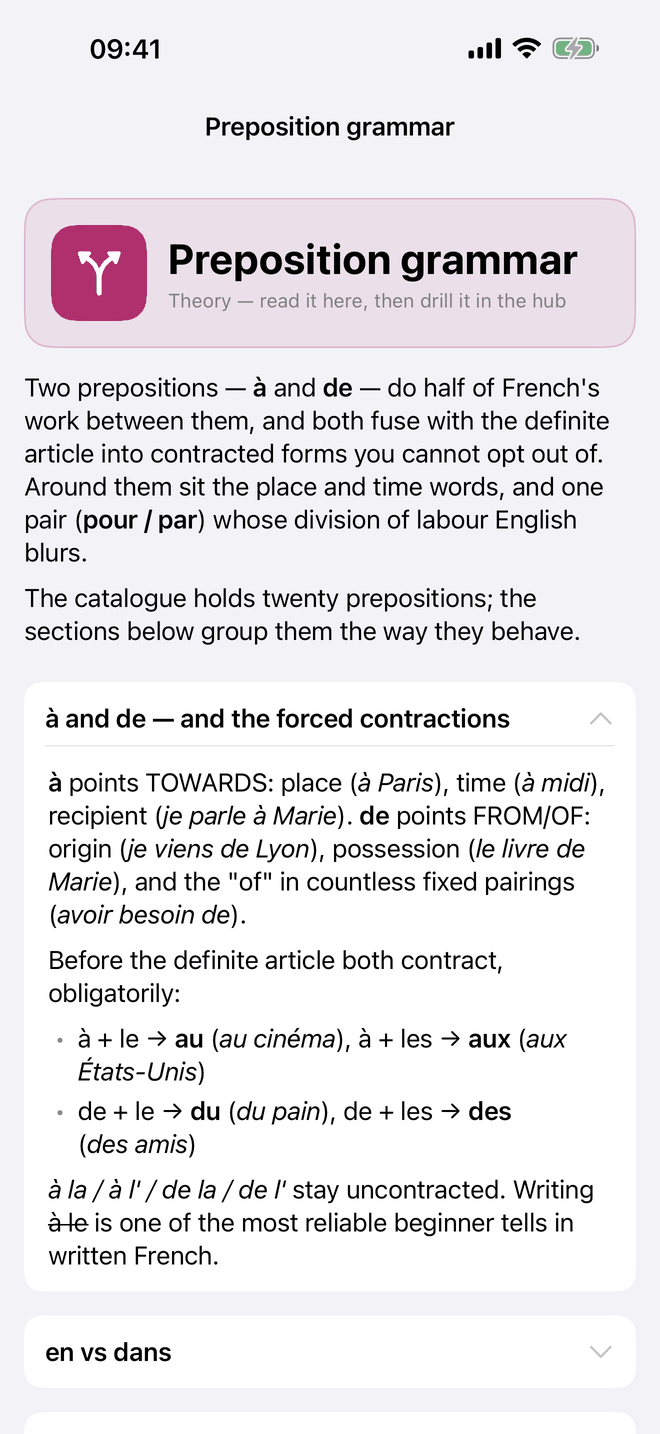
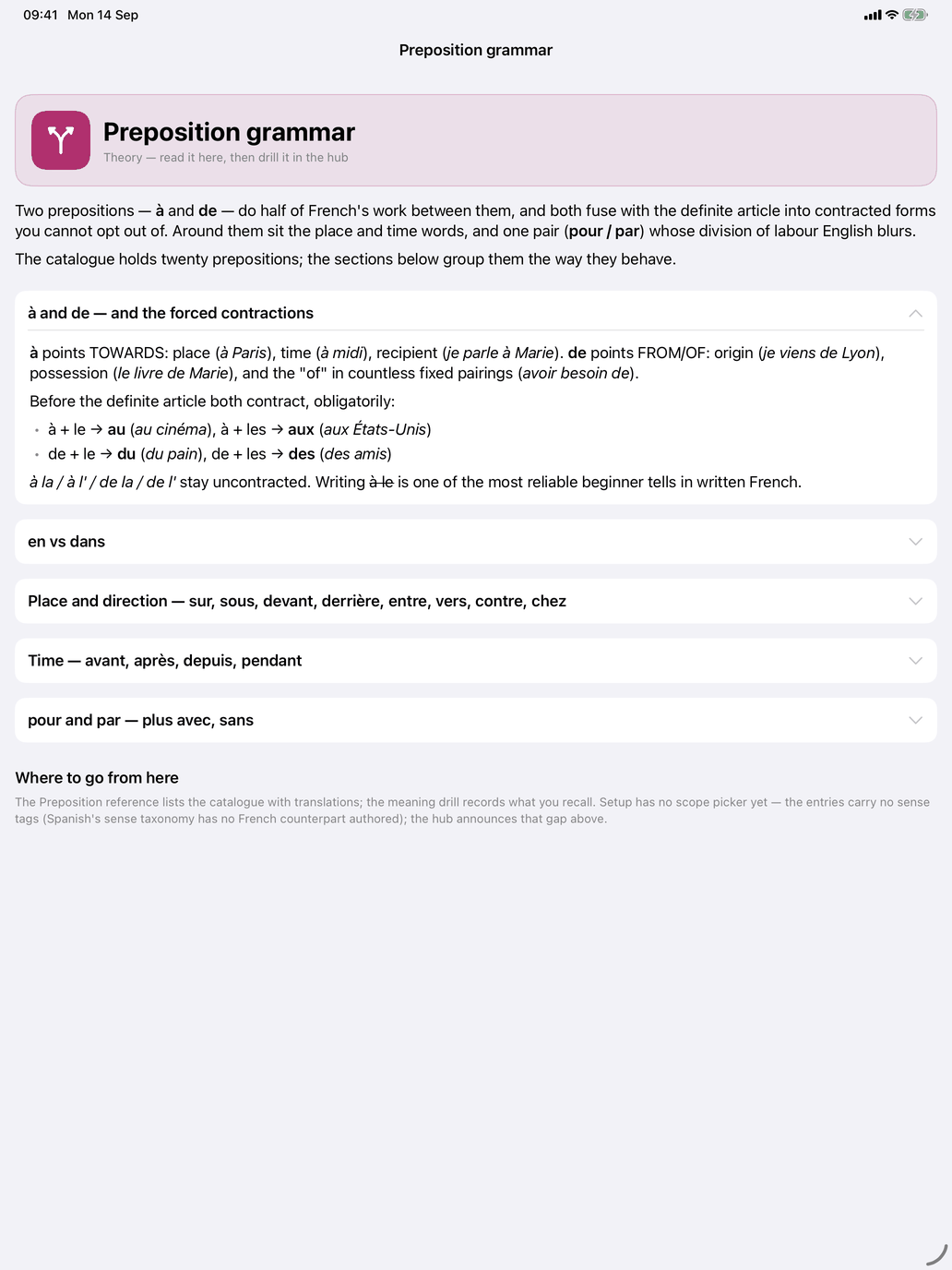
A reference page; nothing is recorded.
À and de. À points towards: a place (à Paris), a time (à midi), a person you give or speak to (je parle à Marie). De points from or means "of": origin (je viens de Lyon), possession (le livre de Marie) and many fixed pairings (avoir besoin de). Before le and les both contract, always:
- à + le → au (au cinéma), à + les → aux (aux États-Unis)
- de + le → du, de + les → des
À la, à l', de la and de l' don't contract. Writing à le is one of the surest beginner mistakes.
En and dans. Both mean "in":
- dans — physically inside (dans la boîte, dans la maison), and "in … from now": je pars dans une heure.
- en — states, materials, months, years, and feminine countries (en France, en été, en 2026), and how long something took: j'ai fait le trajet en une heure.
Place and direction. Sur / sous (on / under), devant / derrière (in front of / behind), entre (between), vers (towards, and "around" a time: vers midi), contre (against). Chez means "at the place of": chez moi, chez le médecin. It takes a person, not a place name.
Time. Avant / après (before / after) and pendant (during, or for a completed stretch: pendant deux heures). Depuis ("since / for") takes the present for something still going on, where English uses the perfect: j'habite ici depuis trois ans — "I have lived here for three years".
Pour and par. Pour marks purpose, destination and benefit: un cadeau pour toi, le train pour Paris, pour apprendre. Par marks the route, the means, the agent and distribution: par la fenêtre, par le train, écrit par Hugo, trois fois par semaine. Avec and sans (with / without) complete the set; sans usually takes no article: sans argent.
Preposition reference
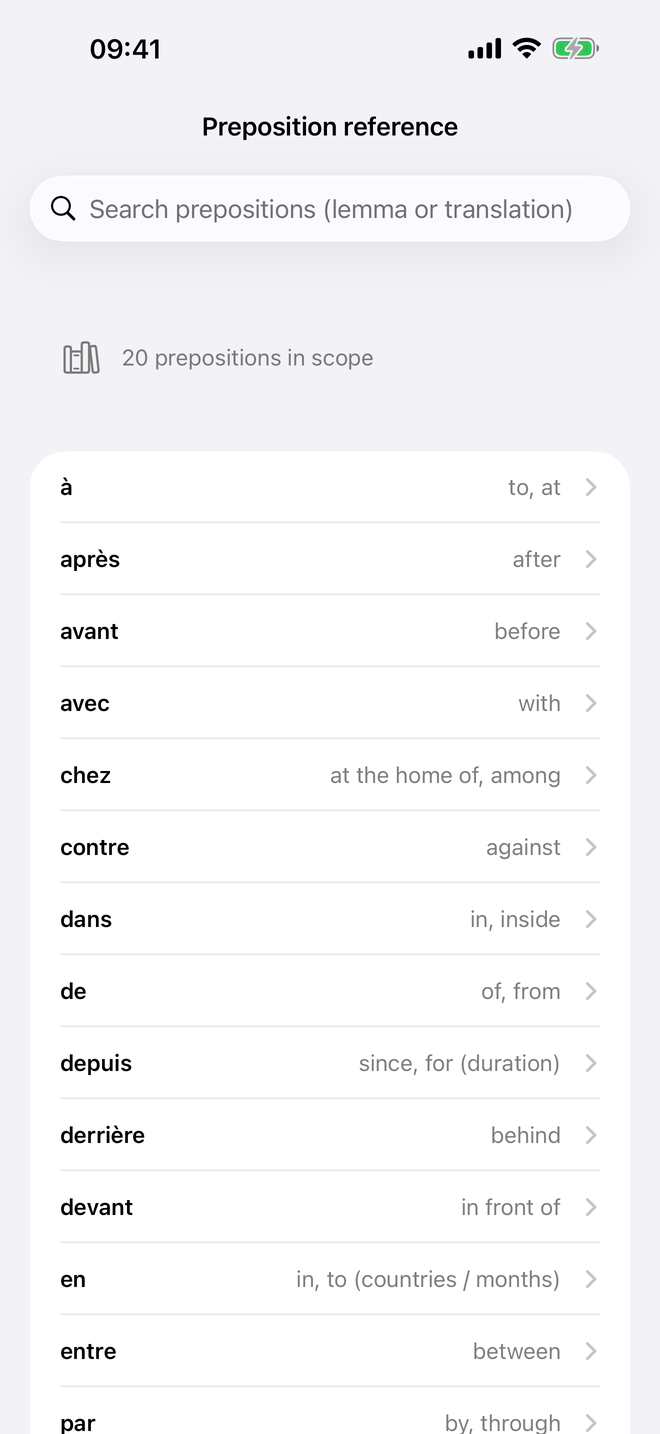
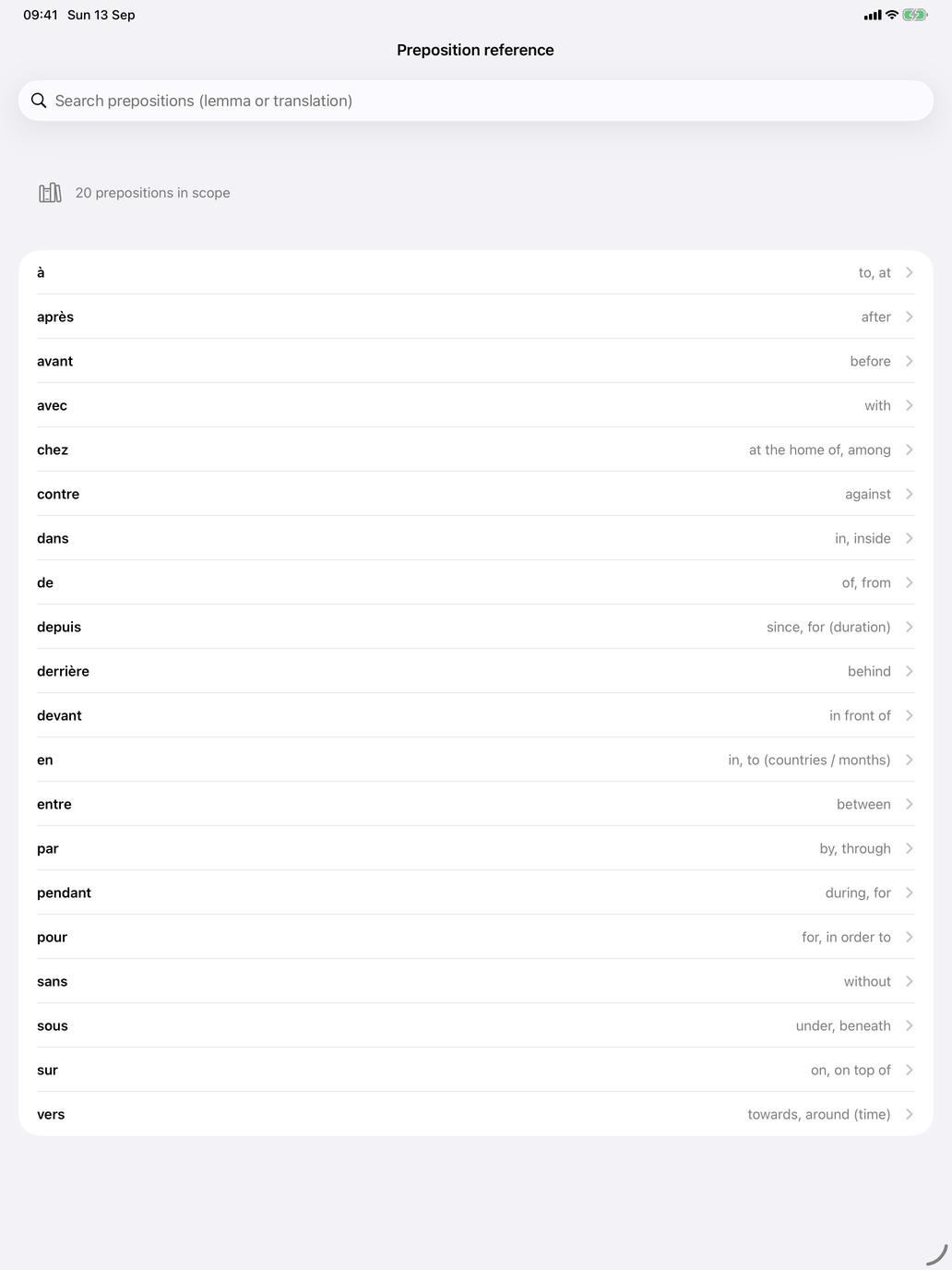
A browse-only list of the selected prepositions with their translations, with a search field. Nothing is recorded.
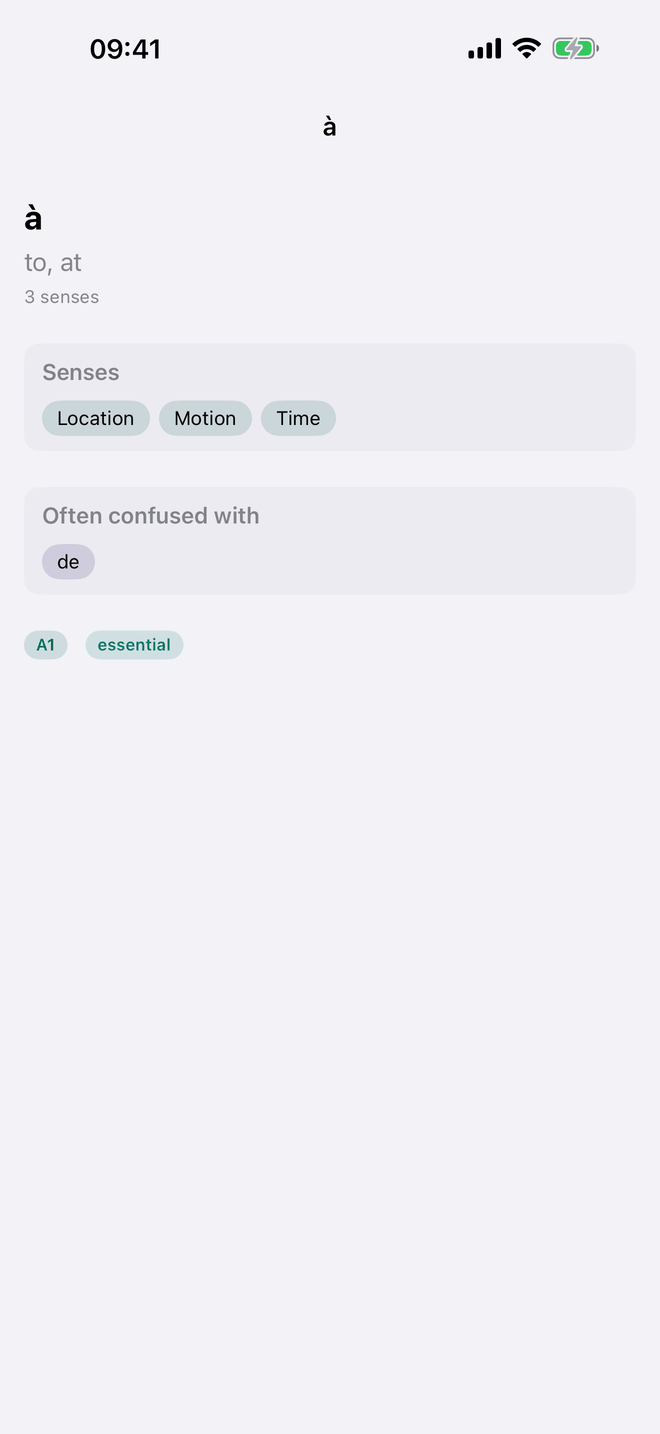
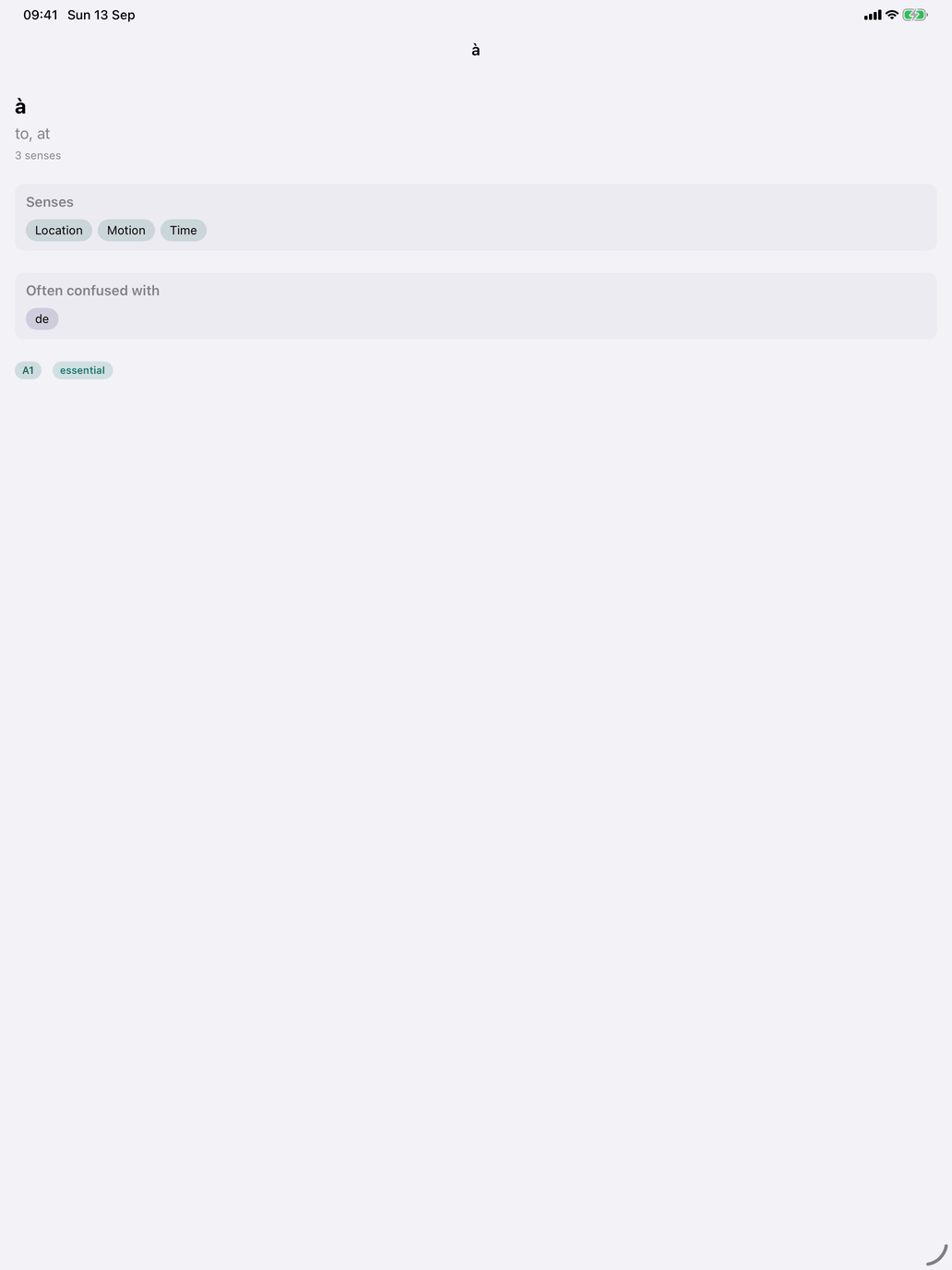
Tap a preposition to open its page: the preposition and its translation, how many senses it has, its Senses, and — for the eight contrast prepositions — Often confused with, naming its partner (pour ↔ par, en ↔ dans, à ↔ de, depuis ↔ pendant). Its level and frequency are shown at the bottom.
Preposition meaning
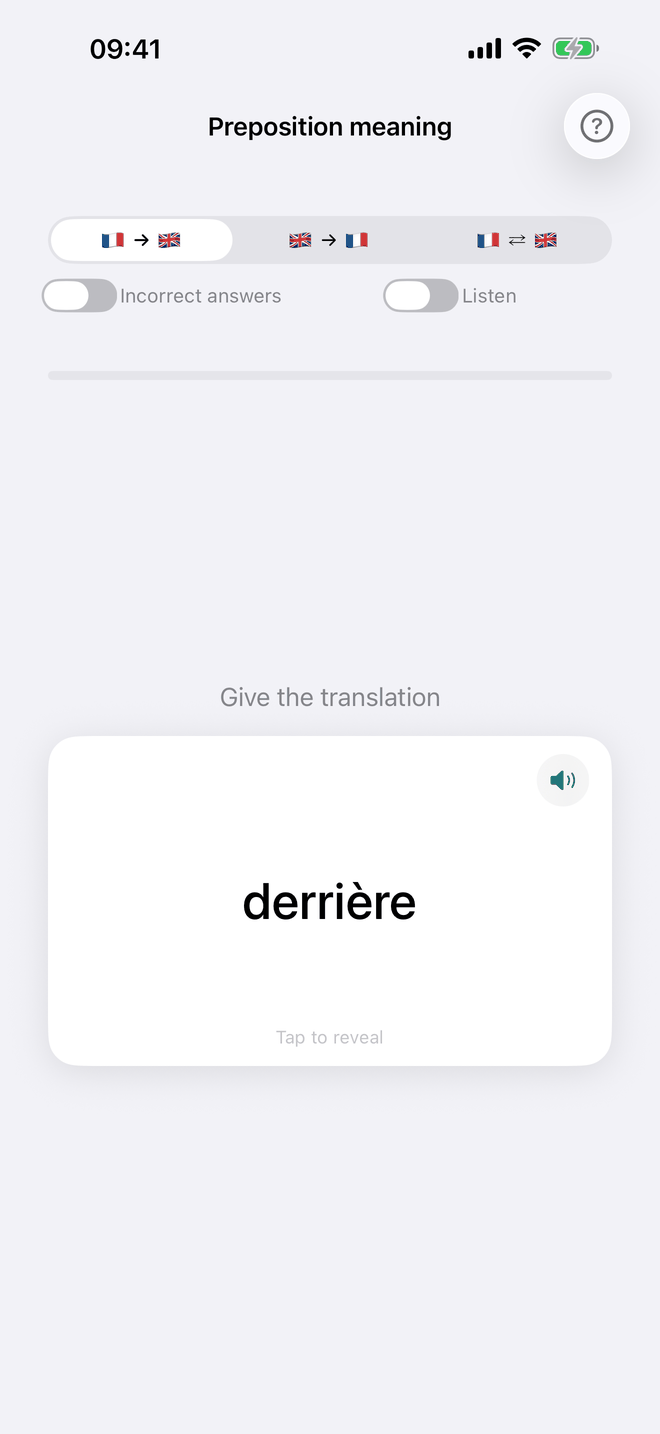
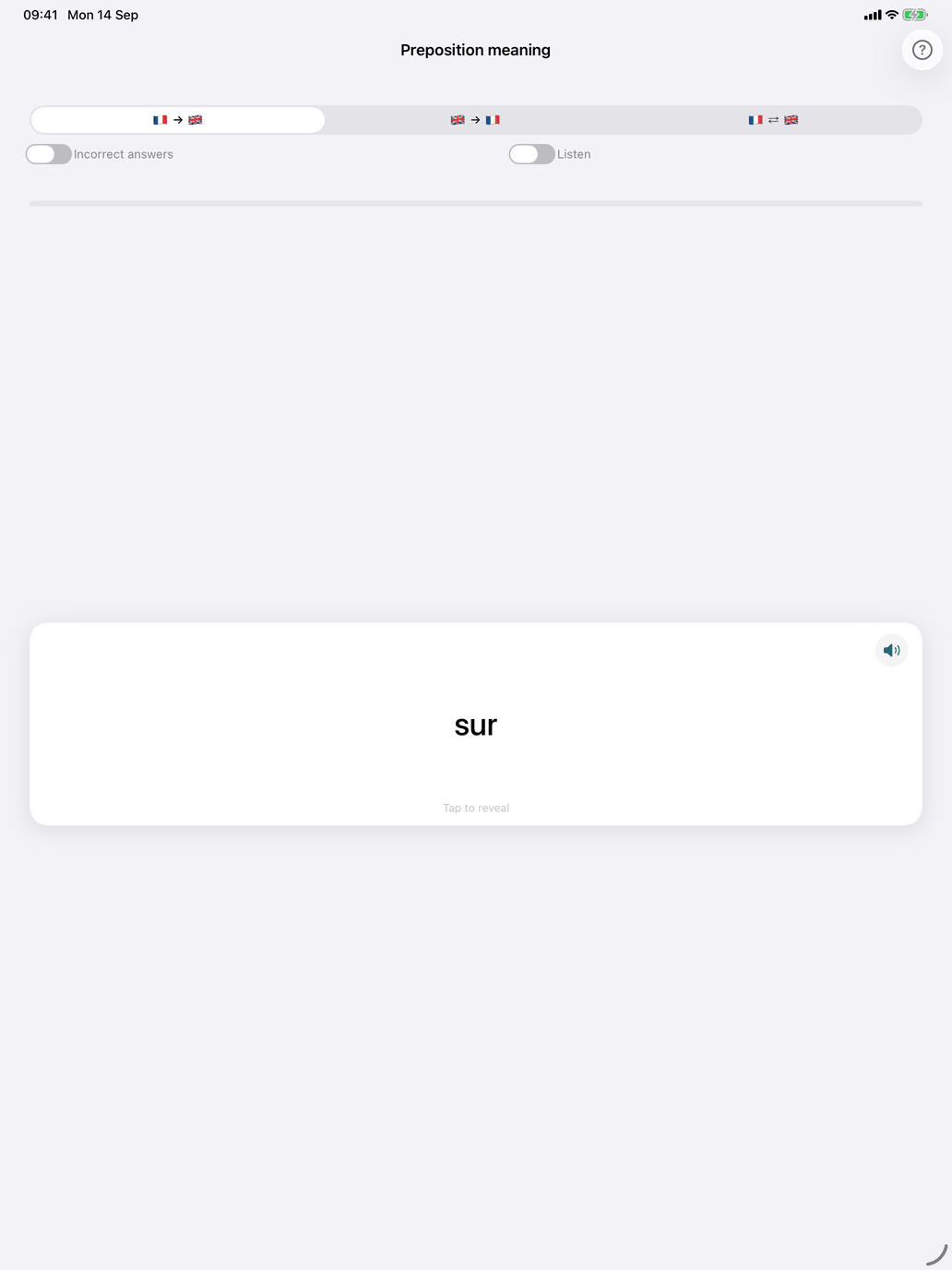
A flashcard deck for the meaning of the selected prepositions, in either direction. It works like Noun meaning. Every answer is recorded.
Contrast drill
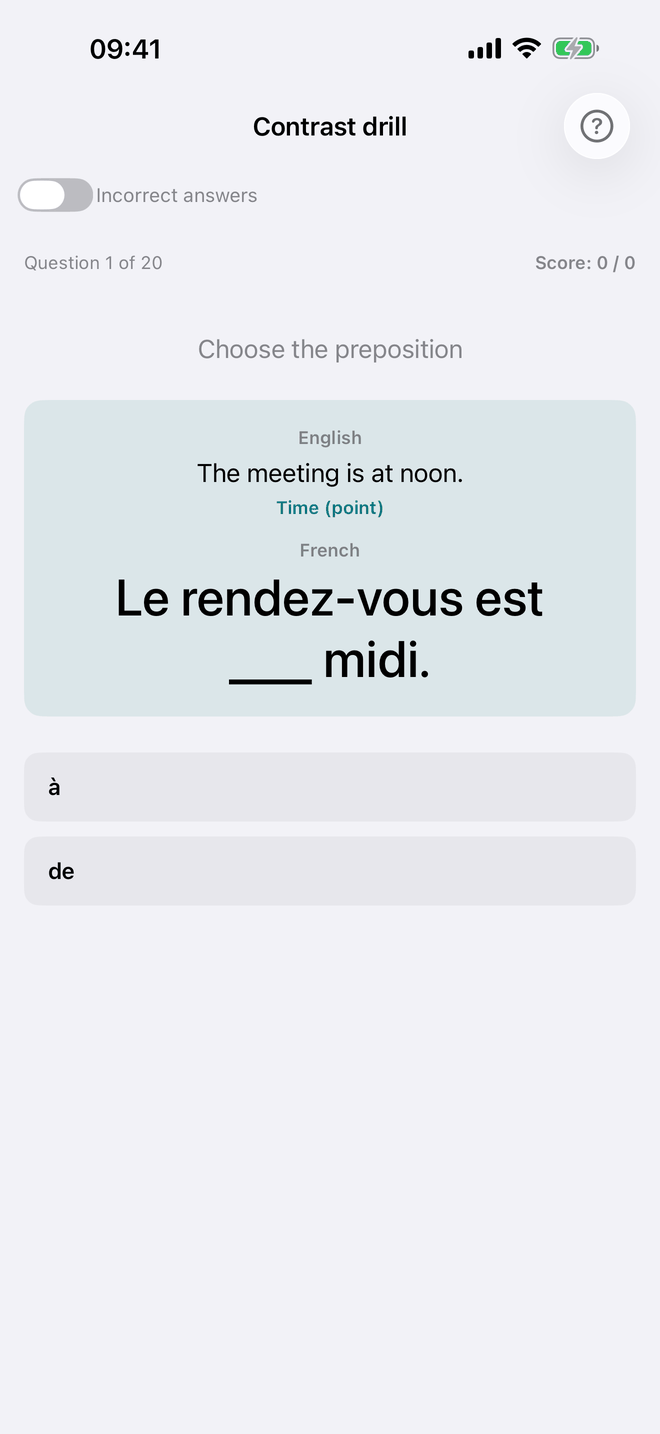
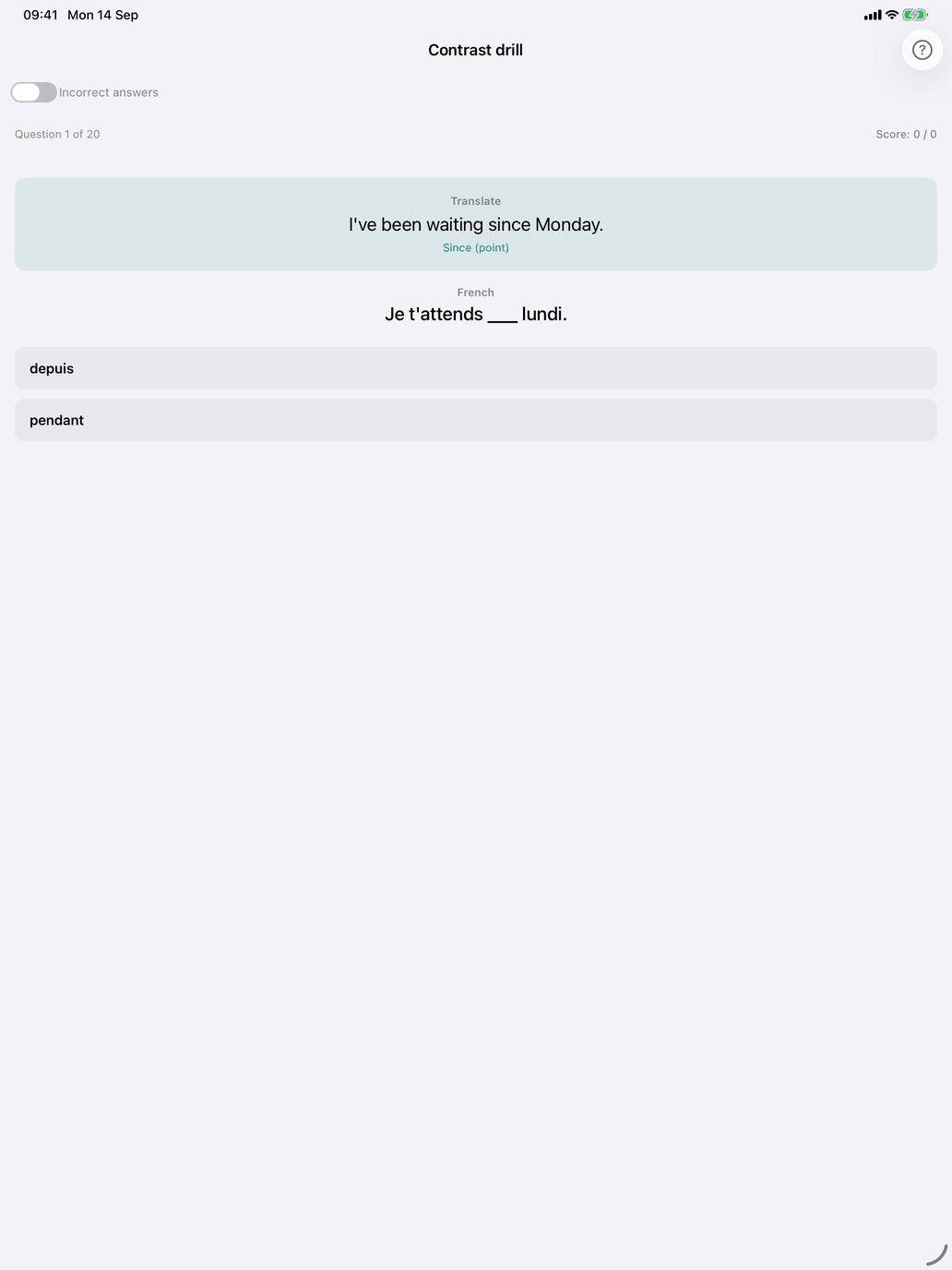
Each question shows an English sentence with a label naming the use, and the French sentence with a gap. You choose between the two prepositions of a pair:
- pour / par — J'étudie ___ apprendre le français (Purpose → pour); Écrit ___ Victor Hugo (Agent → par); Trois fois ___ semaine (Per → par).
- en / dans — J'habite ___ France (→ en); Les clés sont ___ la boîte (→ dans); Je pars ___ une heure (Time from now → dans) against J'ai fait le trajet ___ une heure (Time taken → en).
- à / de — Je vais ___ Lyon (Destination → à); Je viens ___ Lyon (Origin → de); Un verre ___ vin (→ de).
- depuis / pendant — J'habite ici ___ trois ans (Ongoing (since) → depuis); J'ai travaillé ___ deux heures (Completed duration → pendant).
Some sentences vary from question to question: the city, the length of time, the month or the activity changes. After you answer, the right preposition is marked and a card explains the difference. Tap Next question to go on.
A question is included only when its answer is among the prepositions in your selection. Answers are recorded per preposition and use, so the uses you miss come back more often. If none of the eight contrast prepositions is selected, the drill asks you to add senses in Setup.