Nouns whose meaning changes with the article
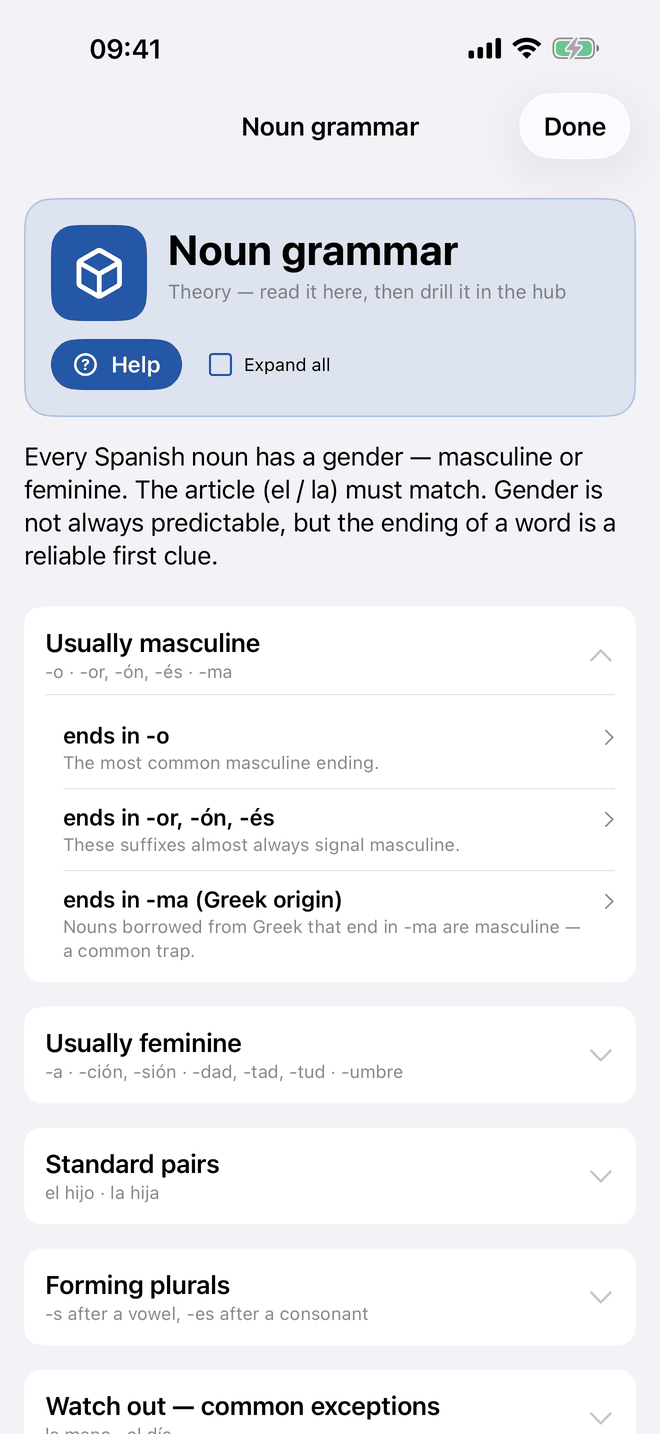
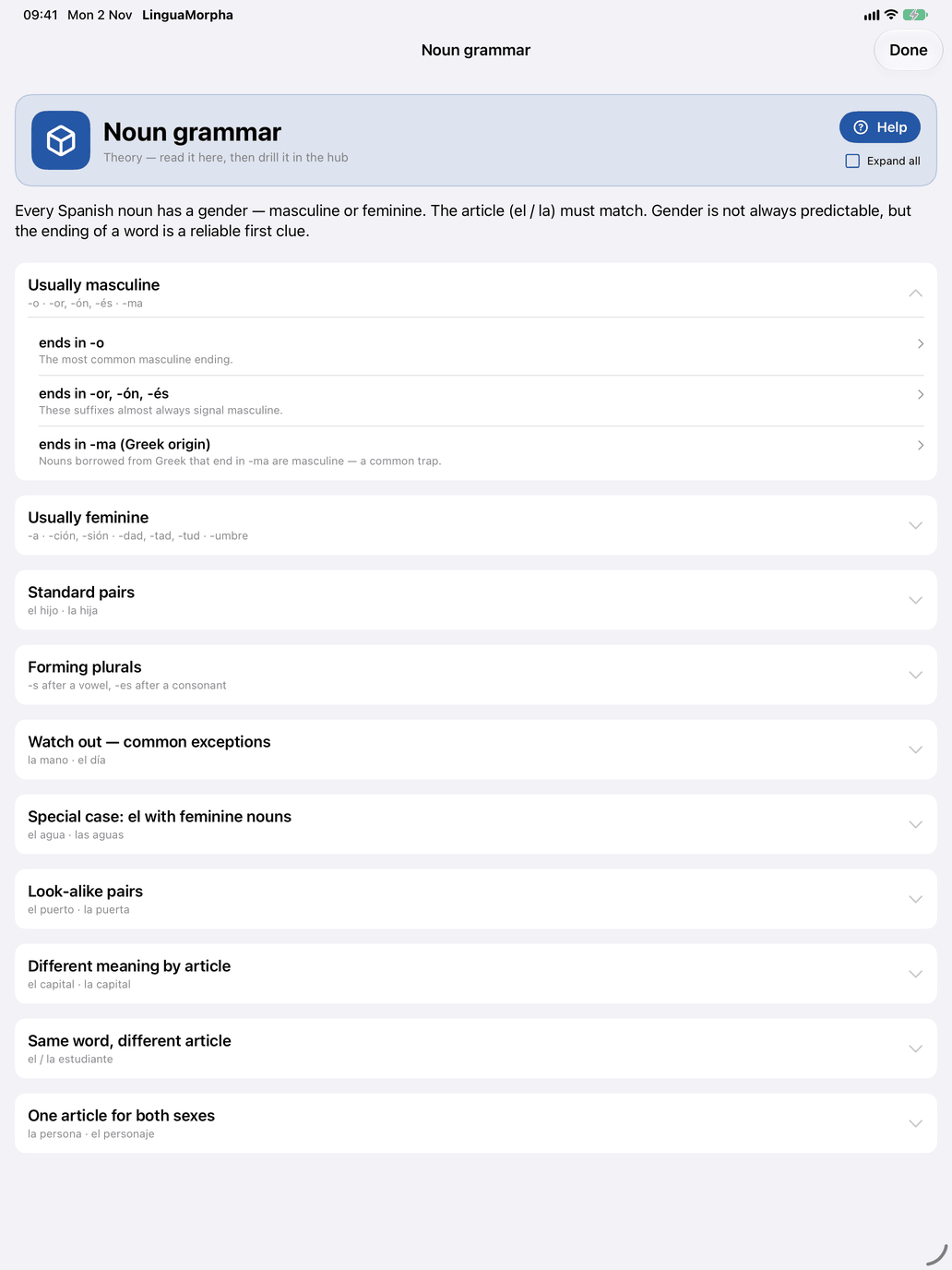
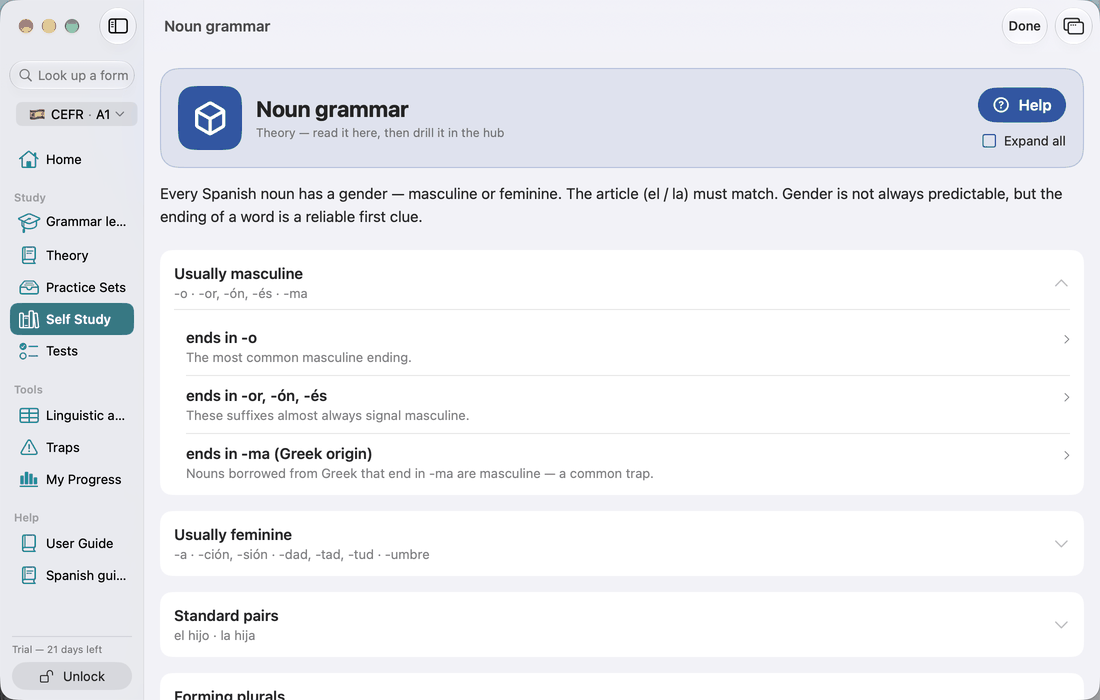
These nouns are explained in the last cards of Noun grammar, which also opens as a sheet from the ? button in the Alternate gender pairs drill (tap Done to close it). Two cards belong together:
- Different meaning by article — one word with two unrelated meanings, where only the article tells you which is meant.
- Same word, different article — one word used for both genders with the same meaning (el / la dentista, el / la estudiante). Only the article changes.
Read side by side, the two cards show the contrast: in the first the meanings differ, in the second they don't.
These are the nouns whose meaning changes with the article:
| Noun | el | la |
|---|---|---|
| capital | capital (money) | capital (city) |
| coma | coma | comma |
| cometa | comet | kite |
| corte | cut | court (royal) |
| cura | priest | cure |
| cólera | cholera | anger, wrath |
| disco | record, disc | nightclub |
| editorial | editorial (opinion piece) | publishing house |
| frente | front (military, weather) | forehead |
| orden | order (arrangement) | order (command) |
| papa | Pope | potato |
| pendiente | earring | slope |
These lists always show the whole catalogue, whatever you have selected.
Why this matters. You usually meet a noun with one gender, so a noun that takes either article is disorienting. Both sentences below are grammatical, but they say different things:
- Hay un orden — there is an order (a sequence).
- Hay una orden — there is an order (someone has given a command).
To practise these nouns, use Meaning changes with gender.