Preterite or imperfect
Spanish has two simple past tenses, the indefinido and the imperfecto. The choice between them is not about when something happened but about how you look at it: as a completed event, or as something ongoing, habitual or in the background. The conjugation drills tell you which tense to use; this drill asks you to choose it. It works like the other choice drills (see The choice drills).
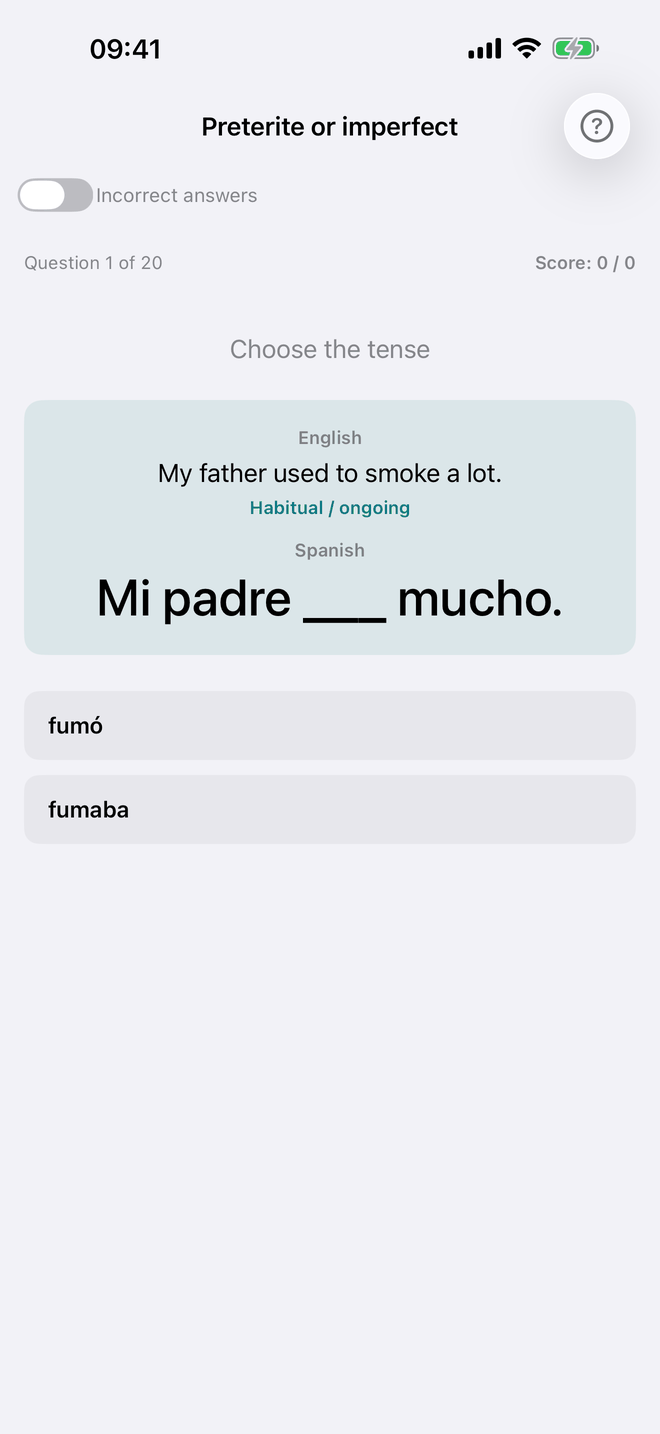
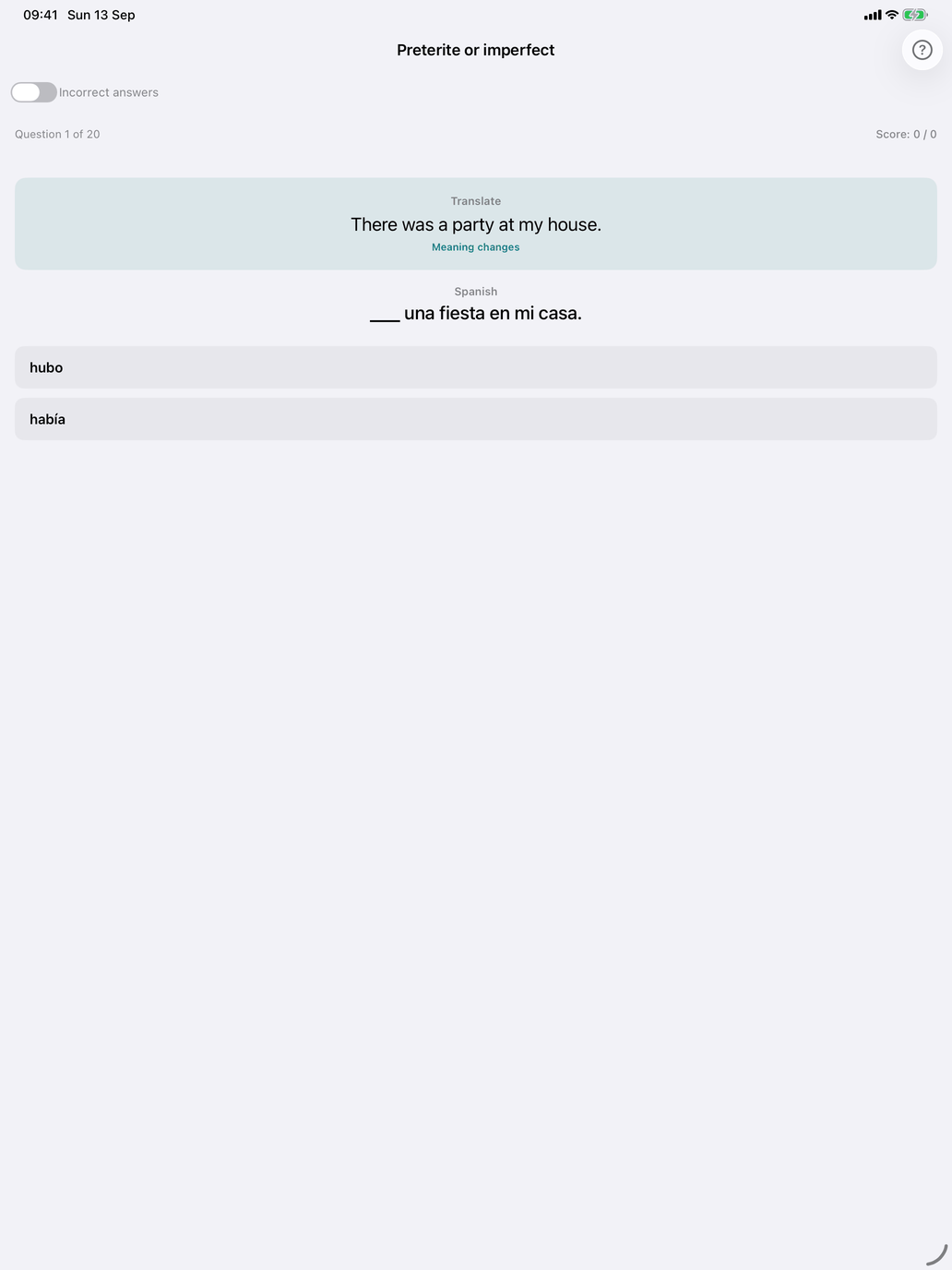
How a question looks. Under the instruction "Choose the tense", the card shows the sentence in your language. Under it is a badge naming the principle at work, and below them the Spanish sentence with a gap. The two options are the same verb in the indefinido and in the imperfecto (comí / comía). After you answer, a card explains the choice.
The three kinds of question.
- A time marker points the way. Ayer, anoche, el año pasado, de repente and a counted number of times (tres veces) go with the indefinido (Completed event). Siempre, todos los días, de niño and English "used to" go with the imperfecto (Habitual / ongoing). Descriptions, the weather, clock time and age in the past take the imperfecto (Description). These markers are useful, but they are only part of the deck, so that you can't score by spotting adverbs.
- A scene and an interruption. Mientras leía, sonó el teléfono. The imperfecto sets the scene (Backdrop); the indefinido is the event that cuts into it (Interruption), and a series of events is told in the indefinido (Chain of events). A period with clear limits is still a completed event: Viví en Madrid durante tres años takes the indefinido (Closed duration).
- The verb changes meaning (Meaning changes). A few verbs mean something different in each tense. The Spanish sentence is the same for both options, so the sentence in your language is your only clue:
| Indefinido | Imperfecto |
|---|---|
| conocí — I met | conocía — I knew |
| supe — I found out | sabía — I knew |
| quiso — he tried | quería — he wanted |
| no quiso — he refused | no quería — he didn't want to |
| pude — I managed to | podía — I was able to |
| tuve — I got, received | tenía — I had |
| hubo — there was (it took place) | había — there was (it existed) |
What's recorded. Each principle is recorded separately, so a principle you keep missing, such as Backdrop, comes back more often.